ChatGPT Ads launched in India in late August 2026, and every D2C founder we talk to at Mathew Digital has asked some version of the same question since: does this change where we should be spending? The honest answer, upfront, is mostly no. Meta remains the dominant D2C acquisition channel in India for good reason — it commands roughly 68% of total Indian e-commerce ad budgets, and that dominance is earned through visual discovery, dynamic catalog ads, and a retargeting infrastructure that ChatGPT Ads simply doesn’t have yet.
But “mostly no” isn’t “entirely no.” For a specific slice of D2C — higher-consideration categories where customers actually research before buying — ChatGPT Ads is worth a genuine, small-scale look. This guide by Mathew Thomas breaks down ChatGPT Ads vs Meta Ads specifically through a D2C lens: what each platform does well, what D2C categories fit each one, what both cost, and where your next rupee of ad budget should actually go.
What Is Meta Ads for D2C Brands?
Meta Ads — spanning Facebook and Instagram, including Feed, Stories, and Reels placements — has been the backbone of Indian D2C growth for the better part of a decade. It’s built specifically for the kind of visual, scroll-driven discovery that D2C selling depends on.
Why Meta became the D2C default in India:
- Visual-first discovery: Product photography, video, and Reels creative match how D2C buyers actually browse — not searching with intent, but discovering through scroll
- Dynamic catalog and retargeting: Meta’s Advantage+ Shopping campaigns now deliver 22-32% lower cost per acquisition compared to manually configured campaigns, and catalog-driven dynamic ads automatically show the right product to the right browser
- Reels-first cost efficiency: Reels placements run 25-40% cheaper on CPM than traditional Feed placements — a meaningful shift in how D2C brands should be allocating creative in 2026
- Mature retargeting: Website visitors, cart abandoners, and past purchasers can all be re-engaged automatically, recovering revenue that a single-touch channel would lose
- Massive scale at low cost: India has some of the cheapest Meta inventory in the world — Facebook CPCs typically run ₹2-₹25, Instagram CPCs ₹6-₹55, with CPMs generally in the ₹30-₹400 range depending on placement and competition
For the full breakdown of what Meta Ads actually cost across categories, see our detailed guide on Meta Ads cost in India.
What Is ChatGPT Ads?
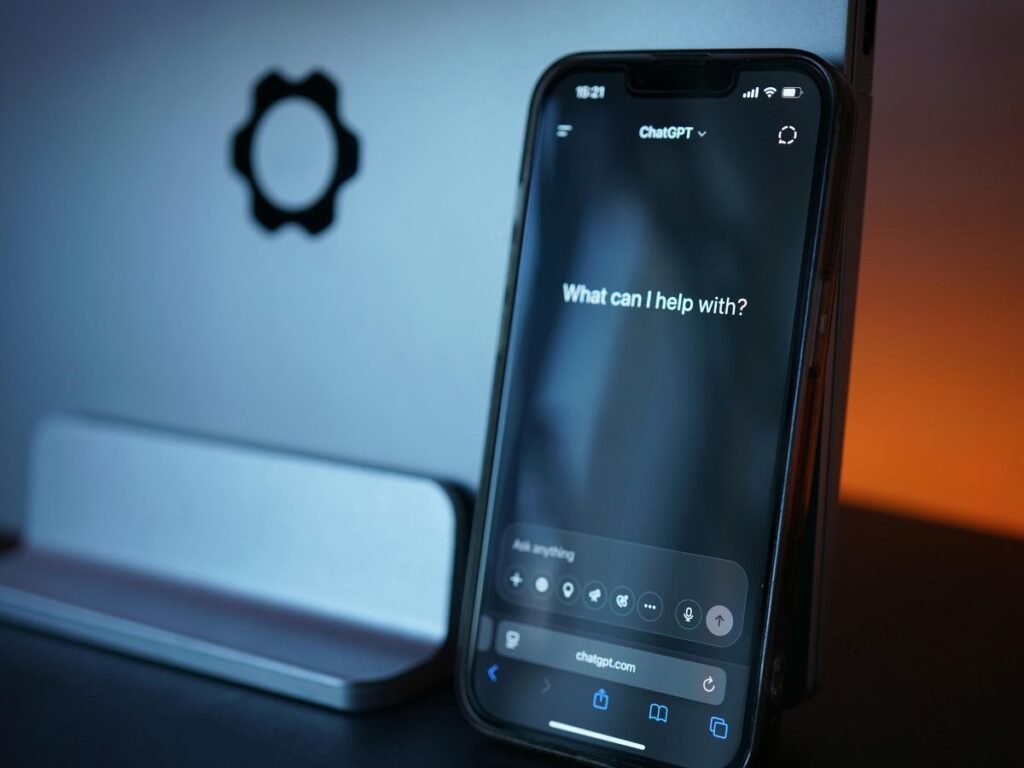
ChatGPT Ads is OpenAI’s advertising platform, showing sponsored recommendation cards inside ChatGPT conversations. Self-serve access opened in India on September 4, 2026, following an initial rollout to roughly 50 brands through agency partnerships with WPP and Omnicom.
What ChatGPT Ads actually looks like today:
- One ad format: A labelled “Sponsored” card appearing beneath a ChatGPT response
- Context-hint targeting: Advertisers define the kinds of conversations their ad is eligible to appear in — there’s no product catalog feed and no keyword bidding
- Free and Go tier only: Ads show to logged-in adults on ChatGPT’s Free tier and the ₹399/month Go tier; Plus and Pro subscribers stay ad-free
- ₹725/day minimum spend on the self-serve Ads Manager
- No retargeting, no dynamic catalog ads yet — every placement is a fresh-context exposure, not part of an ongoing remarketing funnel
- Aggregated reporting only — impressions, clicks, spend, CTR, conversions at campaign level, not the pixel-level tracking D2C brands are used to from Meta
The category fit is real for D2C: OpenAI’s ad policy explicitly includes “household and consumer goods” among its currently allowed advertiser categories. The question isn’t whether D2C brands can advertise here — it’s whether the platform’s current strengths match how most D2C products actually get bought.
ChatGPT Ads vs Meta Ads: The Core Difference
The core distinction between these two platforms comes down to what kind of buying behaviour each one is built to intercept.
Meta Ads intercepts discovery. A user scrolling Instagram isn’t looking for your product — they weren’t thinking about it thirty seconds ago. Meta’s entire model is built around interrupting that scroll with something visually compelling enough to stop for, often before the buyer has consciously decided they want anything.
ChatGPT Ads intercepts a reasoning process already underway. A user asking ChatGPT “what’s a good vitamin C serum for sensitive skin” has already decided they want something in that category — they’re mid-research, not mid-scroll.
This distinction explains most of the practical differences between the two platforms for D2C specifically:
| Meta Ads | ChatGPT Ads | |
| Buyer stage | Often pre-intent — discovery and impulse | Often mid-consideration — active research |
| Targeting basis | Interest, behaviour, lookalike audiences, catalog feed | Context hints — conversation topics |
| Ad formats | Feed, Stories, Reels, Catalog, Carousel, Video | One format — sponsored recommendation cards |
| Retargeting | Mature, core to the platform | Not available yet |
| Creative demands | High — visual quality drives performance | Lower — text-based context matching |
| Best D2C fit | Impulse, visual, lower-consideration products | Higher-consideration, research-driven products |
| Platform maturity | 20 years | Weeks |
| India CPM range | ₹30-₹400 | Still in early price discovery |
ChatGPT Ads vs Facebook Ads: How Targeting Actually Differs
Comparing ChatGPT Ads vs Facebook Ads specifically at the targeting mechanics level clarifies why creative and campaign strategy have to change completely between the two.
Facebook Ads targeting works through a combination of interest signals, behavioural data, lookalike audiences built from existing customers, and — critically for D2C — catalog feed integration that automatically matches the right product to the right browsing pattern. A skincare brand can let Meta’s algorithm show serum ads to users who’ve engaged with skincare content, then dynamically retarget anyone who viewed a specific product page.
ChatGPT Ads targeting works through context hints — descriptions of the kinds of conversations and questions an ad should be eligible to appear against. There’s no catalog integration, no interest-based audience building, no lookalike modelling. A skincare brand instead defines something like “conversations about vitamin C serums for sensitive skin” and the ad becomes eligible to appear when a user’s conversation matches that context closely enough.
What this means practically for D2C creative:
- Meta rewards strong visual creative — product photography, video, Reels-native content
- ChatGPT Ads rewards precise context definition — understanding exactly what questions your ideal customer would actually ask before your product becomes relevant to recommend
- Meta’s catalog integration scales automatically across your full product range; ChatGPT Ads currently requires manually choosing which specific products or categories to advertise
Where Meta Ads Wins for D2C
For the large majority of D2C categories, Meta remains the stronger choice in 2026:
- Impulse and visually-driven products: Apparel, accessories, home décor, beauty — anything that sells on the strength of an image or video stopping a scroll
- Catalog-scale businesses: Brands with dozens or hundreds of SKUs benefit enormously from dynamic catalog ads that Meta automates entirely
- Retargeting and cart recovery: A meaningful share of D2C revenue comes from re-engaging visitors who didn’t convert on their first visit — something ChatGPT Ads can’t currently do at all
- Proven, documented ROAS: Two decades of Meta advertising data across nearly every D2C category means predictable, forecastable performance
- Scale: Billions of daily active users across Facebook and Instagram, against ChatGPT’s current Free/Go-tier-only reach
For most D2C brands, most of the time, Meta should remain the primary channel — not because ChatGPT Ads doesn’t work, but because most D2C buying behaviour is still discovery-driven rather than research-driven.
Where ChatGPT Ads Could Work for D2C

The exception is real, and worth taking seriously for the right category. ChatGPT Ads fits D2C brands selling products people genuinely research before buying:
- Supplements and wellness products: Customers often ask detailed questions — dosage, ingredient comparisons, suitability for specific conditions — before purchasing
- Skincare and haircare with an active-ingredient focus: Products positioned around specific concerns (sensitive skin, anti-aging, hair thinning) invite exactly the kind of comparative research conversation ChatGPT Ads is built to intercept
- Higher-ticket home goods: Mattresses, furniture, air purifiers, and similar considered purchases where customers compare options before committing
- Wellness tech and devices: Sleep trackers, fitness equipment, and health devices where buyers typically research specifications and reviews first
A simple self-check for D2C brands: would a real customer plausibly ask ChatGPT something like “what’s the best [category] for [specific need]” before buying your product? If yes, a small ChatGPT Ads test is worth running. If your product mostly sells on visual appeal, trend relevance, or impulse — the honest answer is that Meta will keep outperforming ChatGPT Ads for your category for the foreseeable future.
ChatGPT Ads vs Meta Ads: Cost Comparison
Without going too deep into pricing mechanics (our dedicated Meta Ads cost in India guide covers Meta’s full benchmarks by category), here’s the practical comparison for 2026:
Meta Ads:
- Facebook CPC typically ₹2-₹25, Instagram CPC ₹6-₹55
- CPM generally ₹30-₹400 depending on placement and competition
- Reels placements run 25-40% cheaper on CPM than Feed
- Sale-season CPMs (festive, Black Friday-equivalent periods) can run 2-3x normal levels
- Two decades of category-specific benchmarking data available
ChatGPT Ads:
- ₹725/day minimum spend on the self-serve Ads Manager
- Early global CPMs reportedly launched around 3x Meta’s typical rate before compressing over subsequent weeks
- India-specific CPM and CAC benchmarks don’t exist yet in any reliable form — the platform is simply too new
- No retargeting layer means cost efficiency depends entirely on getting context-hint targeting right the first time
The practical read for D2C budgets: Meta remains the more cost-predictable, better-benchmarked platform by a wide margin. ChatGPT Ads’ true cost picture for Indian D2C brands is still being established — treat any spend here in 2026 as a deliberate, small-scale experiment, not a forecastable budget line.
Where Should D2C Brands Spend?
A practical framework for allocating D2C ad budget between the two platforms in 2026:
Keep Meta as your primary channel if:
- Your product sells primarily on visual appeal, trend relevance, or impulse
- You have a catalog of multiple SKUs that benefits from automated dynamic ads
- Retargeting and cart recovery are meaningful parts of your current funnel
- You need predictable, forecastable CAC to plan cash flow
Add a small ChatGPT Ads test if:
- Your product fits a genuinely considered-purchase category (supplements, active-ingredient skincare, higher-ticket home goods, wellness tech)
- You have budget beyond what’s already working on Meta, not budget you’d be pulling away from it
- You’re comfortable with a real experiment — limited data, no retargeting, aggregated attribution — rather than expecting immediate, measurable ROAS
- You want early-mover familiarity with a channel likely to mature and grow over the next few years
Skip ChatGPT Ads for now if:
- Your product is impulse-driven, trend-dependent, or highly visual
- Your current Meta account isn’t yet fully optimised (Advantage+ Shopping campaigns not yet running, Reels creative underinvested)
- You don’t have incremental budget beyond what’s already driving results
For nearly every D2C brand comparing ChatGPT Ads vs Meta Ads honestly in 2026, the right allocation is overwhelmingly weighted toward Meta, with ChatGPT Ads reserved for a narrow, deliberate test if your category genuinely fits.
Can D2C Brands Run Both?
Yes, and for brands in the higher-consideration category described above, running both makes more sense than choosing exclusively.
A sensible way to structure both for D2C:
- Meta Ads handles discovery, visual-driven acquisition, catalog-scale product promotion, and retargeting — the bulk of the funnel
- ChatGPT Ads runs as a small, isolated test targeting the specific considered-purchase products in your catalog that genuinely fit conversational research behaviour
- Meta retargeting picks up any ChatGPT-referred visitors who don’t convert immediately, since ChatGPT Ads can’t retarget natively yet
- UTM tracking on every ChatGPT Ads landing page is essential, since the platform’s own reporting won’t give you the granular attribution Meta advertisers are used to
Treating the two as complementary — Meta as the proven backbone, ChatGPT Ads as a bounded experiment for the right products — avoids both the mistake of ignoring a genuinely new channel and the mistake of over-investing in one that’s still finding its shape.
Common Mistakes D2C Brands Make
1. Pulling budget from a working Meta account to fund ChatGPT Ads Reallocating proven spend to an unproven, weeks-old platform is premature for almost any D2C brand. Test with incremental budget only.
2. Running impulse or trend-driven products on ChatGPT Ads The context-hint model and current conversion data both favour genuine deliberation. Fast fashion, trend accessories, and novelty products are a poor fit right now.
3. Expecting ChatGPT Ads to match Meta’s CTR benchmarks ChatGPT Ads CTR typically runs 0.3-1.5%, well below Meta’s 1.2-2.5% range. This isn’t necessarily a failure signal — it reflects a different kind of traffic — but judging the two platforms on the same metric leads to premature conclusions.
4. Skipping UTM tracking on ChatGPT Ads campaigns Without deliberate tracking, ChatGPT-referred D2C traffic often shows up as unassigned or direct in analytics, making honest evaluation impossible.
5. Ignoring Meta’s Advantage+ and Reels-first shifts while chasing a new platform Advantage+ Shopping campaigns now deliver 22-32% lower CPA than manual setups, and Reels CPMs run 25-40% cheaper than Feed. Many D2C brands haven’t fully adopted either shift yet — that’s a bigger, more immediate opportunity than an early ChatGPT Ads test for most brands.
6. Treating this as a binary “vs” decision at all The framing of ChatGPT Ads vs Meta Ads implies a single winner. For the overwhelming majority of D2C brands, the real answer is “Meta, plus a small ChatGPT test only if your category fits” — not an either/or choice.
Looking for a ChatGPT Ads Agency in Bangalore or India?
As ChatGPT Ads matures, D2C brands are increasingly looking for a ChatGPT Ads agency in Bangalore or a ChatGPT Ads agency in India that actually has live campaign experience with the platform — not just theoretical knowledge of a channel that launched weeks ago.
At Mathew Digital, we’re running early ChatGPT Ads tests for D2C clients whose products genuinely fit the platform’s considered-purchase profile, alongside the Meta Ads management that remains the core of most of our D2C engagements. Being based in Bangalore gives us direct visibility into how Indian D2C brands specifically are approaching this new channel — the category restrictions, the realistic budget thresholds, and which considered-purchase categories are actually seeing early traction.
What working with a specialist ChatGPT Ads agency in India should look like right now:
- Live campaign experience, not just theoretical familiarity with a three-week-old platform
- Honest guidance on whether your specific product category fits the current platform limitations
- Proper UTM tracking and cross-channel attribution setup, since native reporting is aggregated
- Incremental budget discipline — testing with new money, never reallocating from a proven Meta account
- Integration with your existing Meta strategy, not a competing, disconnected campaign
If you’re a Bangalore or India-based D2C brand trying to figure out whether ChatGPT Ads deserves a slice of your 2026 budget, that’s exactly the conversation we have with clients before recommending any spend at all.
Conclusion
ChatGPT Ads vs Meta Ads isn’t really a fair fight for most D2C brands in 2026 — and treating it as one risks both over-investing in an unproven channel and dismissing a genuine opportunity for the right products. Meta remains the D2C default in India for good reason: visual discovery, catalog-scale automation, mature retargeting, and two decades of benchmarking data. ChatGPT Ads is a real, still-maturing channel with genuine promise specifically for considered-purchase D2C categories — supplements, active-ingredient skincare, higher-ticket home goods, wellness tech — where customers research before they buy.
Key takeaways:
- Meta intercepts discovery and impulse; ChatGPT Ads intercepts a research process already underway
- Meta commands roughly 68% of Indian e-commerce ad budgets for good reason and should remain the primary D2C channel for most brands
- ChatGPT Ads fits a narrow but real slice of D2C — genuinely considered-purchase categories, not impulse or trend-driven products
- Cost predictability heavily favours Meta right now; ChatGPT Ads pricing in India is still in early discovery
- The two platforms work best together — Meta as the proven backbone, ChatGPT Ads as a small, deliberate test for the right products
Where to start:
- Confirm your Meta account is fully optimised (Advantage+ Shopping, Reels-first creative) before considering any new channel
- Run the self-check: would your customer genuinely ask ChatGPT for a recommendation on this product?
- If yes, test with incremental budget and proper UTM tracking — never with reallocated Meta spend
- Revisit this comparison in 6 months as the platform and India-specific benchmarks mature
Get a Free D2C Paid Media Audit
Not sure whether your D2C ad budget is optimally allocated, or whether your product category genuinely fits a ChatGPT Ads test? The Mathew Digital team offers a free paid media audit for D2C brands. We’ll review your current Meta performance, assess whether ChatGPT Ads makes sense for your specific category, and show you exactly where the opportunity is. No obligation.
Request your free D2C paid media audit →
Frequently Asked Questions
Should D2C brands switch from Meta Ads to ChatGPT Ads?
No, not in 2026, for the large majority of D2C brands. Meta remains the dominant D2C acquisition channel in India, commanding roughly 68% of total e-commerce ad budgets, with mature retargeting, dynamic catalog ads, and two decades of category-specific benchmarking data. ChatGPT Ads is a genuinely new channel — its self-serve Ads Manager only opened in India on September 4, 2026 — with real current limitations including no retargeting and no dynamic catalog ads. At Mathew Digital, we never recommend D2C clients reallocate working Meta budget to fund a ChatGPT Ads test; the sensible approach is testing with incremental budget for the specific product categories that genuinely fit the platform’s considered-purchase profile.
What’s the difference between ChatGPT Ads and Facebook Ads?
The core difference comes down to buyer intent stage and targeting mechanics. Facebook Ads intercepts discovery — a user scrolling Instagram who wasn’t actively looking for your product until a visually compelling ad stopped their scroll — using interest-based targeting, lookalike audiences, and catalog feed integration. ChatGPT Ads intercepts an active reasoning process — a user asking ChatGPT for a recommendation because they’ve already decided they want something in that category — using context-hint targeting rather than catalog or interest-based matching. This means Facebook Ads rewards strong visual creative and scales automatically across large product catalogs, while ChatGPT Ads rewards precise understanding of what questions your ideal customer would actually ask.
Is ChatGPT Ads worth it for D2C brands in India?
It depends heavily on what you sell. For D2C brands selling considered-purchase products — supplements, active-ingredient skincare, higher-ticket home goods, wellness tech — where customers genuinely research before buying, a small ChatGPT Ads test is worth running. For D2C brands selling impulse-driven, visually-led, or trend-dependent products (which describes most Indian D2C), Meta will very likely keep outperforming ChatGPT Ads for the foreseeable future. The simple test: would a real customer plausibly ask ChatGPT for a recommendation on this product before buying? If yes, test it. If no, keep your budget on Meta.
How is ChatGPT vs Meta advertising different for creative strategy?
Meta advertising rewards strong visual creative — product photography, video, and especially Reels-native content, since Reels placements now run 25-40% cheaper on CPM than Feed. Creative quality directly drives performance because Meta’s model depends on stopping a scroll. ChatGPT advertising works differently: since ads appear as text-based sponsored cards inside conversations rather than visual placements in a feed, the strategic work shifts from visual creative production to precisely defining the conversational contexts your ad should be eligible to appear in. D2C brands moving between the two platforms need genuinely different creative and targeting skill sets, not just a repurposed version of existing Meta assets.
Where can I find a ChatGPT Ads agency in Bangalore?
Look for an agency with actual live campaign experience on ChatGPT Ads, not just theoretical familiarity — the self-serve platform only opened in India in early September 2026, so genuine hands-on experience is still rare. At Mathew Digital, a Bangalore-based performance marketing agency, we’re running early ChatGPT Ads tests for D2C clients whose products fit the platform’s considered-purchase profile, integrated alongside the Meta Ads management that remains central to most D2C strategies. When evaluating any ChatGPT Ads agency in India, ask specifically about their UTM tracking setup, their approach to incremental versus reallocated budget, and whether they can honestly tell you if your product category is a good fit for the platform’s current limitations.
How much does ChatGPT Ads cost compared to Meta Ads for D2C brands?
ChatGPT Ads requires a ₹725 per day minimum spend on its self-serve Ads Manager, with India-specific CPM and CAC benchmarks still in early discovery since the platform only launched self-serve access in September 2026. Meta Ads in India typically runs ₹2-₹25 CPC on Facebook, ₹6-₹55 CPC on Instagram, and ₹30-₹400 CPM depending on placement, with two decades of category-specific benchmarking data available for D2C brands to plan against confidently. For the full Meta Ads pricing breakdown by category, see our detailed guide on Meta Ads cost in India. The honest 2026 comparison is that Meta pricing is predictable and forecastable, while ChatGPT Ads pricing for Indian D2C brands should be budgeted as an experiment, not a reliable line item yet.