ChatGPT Ads launched in India in late August 2026, and self-serve access opened on September 4. Since then, one question has come up in almost every strategy call we’ve had at Mathew Digital: should we be testing ChatGPT Ads, or does Google Ads still deserve the whole budget? Businesses researching ChatGPT vs Google Ads are mostly asking the same thing in different words.
The honest answer is that ChatGPT Ads vs Google Ads isn’t really a head-to-head contest yet. One is a mature, auction-based platform with 25 years of refinement, granular attribution, and predictable ROI at nearly any budget. The other is a genuinely new, still-maturing channel with real early promise and real limitations. This guide by Mathew Thomas breaks down how the two platforms actually differ, where each wins, what each costs, and how to decide which one — or which combination — makes sense for your business in 2026.
What Is Google Ads?
Google Ads is the advertising platform behind the sponsored results you see on Google Search, Display Network placements across millions of websites, YouTube pre-roll and in-stream ads, Shopping listings, and app-install campaigns. It runs on a live auction — advertisers bid on keywords or audience signals, and Google’s algorithm decides which ads show, in what order, at what price, based on bid amount and Quality Score.
What makes Google Ads the default choice for most businesses:
- Search Network: Captures users at the exact moment they type a query — the highest-intent form of digital advertising that exists
- Shopping campaigns: Product listings with images and prices, built specifically for e-commerce
- Display Network: Banner and visual ads across millions of partner sites, built for awareness and retargeting
- YouTube Ads: Video advertising across the world’s second-largest search engine
- Performance Max and Demand Gen: AI-driven campaign types that automatically optimise placement and creative across Google’s entire inventory
Google Ads has no minimum spend, granular conversion tracking through GA4 and Google Tag Manager, mature retargeting and remarketing, and a 25-year body of benchmarking data across every industry and geography. For most businesses evaluating ChatGPT Ads vs Google Ads, Google Ads is the established baseline everything else gets measured against.
What Is ChatGPT Ads?
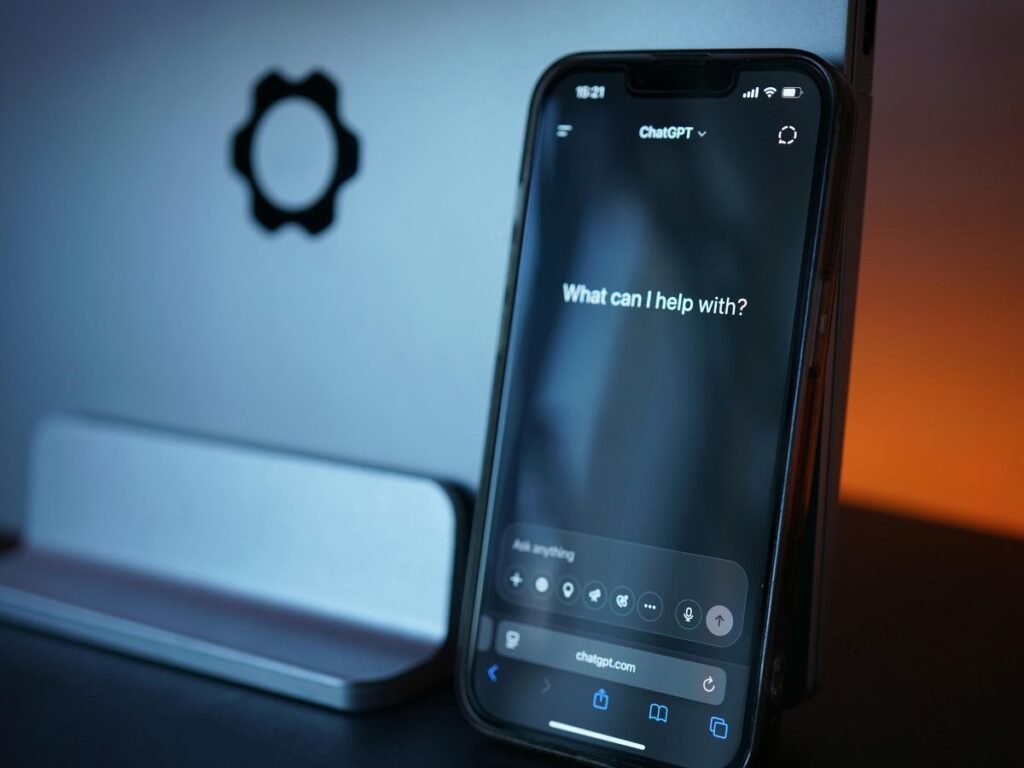
ChatGPT Ads is OpenAI’s advertising platform, showing sponsored recommendation cards inside ChatGPT conversations. It rolled out to India in late August 2026, initially through agency partnerships with WPP and Omnicom to a small set of roughly 50 brands, before opening a self-serve Ads Manager on September 4 with a minimum daily budget of ₹725.
What ChatGPT Ads actually looks like today:
- One ad format: A labelled “Sponsored” card appearing beneath a ChatGPT response, kept visually distinct from the conversational answer itself
- Context-hint targeting: Instead of keyword bidding, advertisers define the kinds of conversations and topics their ad is eligible to appear in
- Free and Go tier only: Ads currently show only to logged-in adults on ChatGPT’s Free tier and the ₹399/month Go tier; Plus and Pro subscribers remain ad-free
- Aggregated reporting: Impressions, clicks, spend, CTR, and conversions at a campaign level — not the granular, pixel-level attribution Google Ads and Meta advertisers are used to
- No retargeting yet, no dynamic catalog ads yet: Every placement is a fresh-context exposure, not part of an always-on remarketing funnel
For any business comparing ChatGPT ads vs Google ads honestly, the first thing to understand is that ChatGPT Ads is roughly three weeks old as a self-serve platform. It’s not a mature alternative yet — it’s a genuinely new discovery channel still finding its shape.
ChatGPT Ads vs Google Ads: The Core Difference
The single most important distinction between these two platforms isn’t pricing or reach — it’s what kind of user behaviour each one intercepts.
Google Ads intercepts declared intent. A user types “best running shoes under ₹5,000” into Google because they’ve already decided, roughly, what they want. Search advertising works by matching that declared intent to a relevant ad at the exact moment it’s expressed.
ChatGPT Ads intercepts a reasoning process. A user asks ChatGPT “I’m training for a half marathon, what should I look for in running shoes?” — and a sponsored recommendation appears as part of the answer to that broader question. The user hasn’t necessarily declared a specific purchase intent yet; they’re often still working through the decision.
This distinction explains almost every other difference between the two platforms:
| Google Ads | ChatGPT Ads | |
| Targeting basis | Keywords, audience signals, remarketing lists | Context hints — topics and conversation types |
| User intent stage | Often high, declared intent | Often mid-consideration, exploratory |
| Ad formats | Search, Shopping, Display, Video, Performance Max | One format — sponsored recommendation cards |
| Attribution | Granular, pixel-level, GA4-integrated | Aggregated campaign-level only |
| Retargeting | Mature, core feature | Not available yet |
| Minimum spend | None | ₹725/day |
| Platform maturity | 25 years | Weeks (self-serve since Sept 4, 2026) |
| Audience reach | All Google users | Free and Go tier ChatGPT users only |
Conversational Ads vs Search Ads: How Targeting Actually Works
Understanding conversational ads vs search ads as a targeting philosophy — not just a platform comparison — is the key to using either one well.
Search ads work on match precision. You bid on “running shoes for marathon training,” Google matches that bid against the searcher’s exact query, and the ad shows if you win the auction. The entire discipline of search advertising is about narrowing keyword match types, negative keywords, and bid adjustments to hit precision.
Conversational ads work on context relevance. You define a context hint like “someone asking for running shoe recommendations for long-distance training,” and ChatGPT’s system decides whether a given conversation matches that context closely enough to show your ad. There’s no keyword match type to configure — the advertiser is describing a situation, not a query.
What this means practically:
- Search advertisers used to granular keyword control will find context-hint targeting looser and less precise — at least for now
- Conversational ads may reach users earlier in their decision process than search ads typically do, since the conversation leading to the ad often includes more explicit context than a three-word search query
- Search ads scale predictably with keyword volume; conversational ad reach depends on how many relevant conversations naturally happen on the topics you’ve defined
Neither approach is objectively better — they’re solving different problems. Search ads are precision instruments for known demand. Conversational ads are still-developing instruments for demand that’s forming in real time.
Where Google Ads Wins
For most businesses, most of the time, Google Ads is still the stronger choice. Specifically:
- Bottom-of-funnel, high-intent capture: Nothing beats Search campaigns for catching a buyer who’s already decided and is choosing where to purchase
- E-commerce with a product catalog: Shopping campaigns with dynamic feed integration remain unmatched for online retail
- Retargeting and remarketing: Google’s remarketing lists and Display Network retargeting are mature, granular, and proven
- Predictable, scalable budgets: No minimum spend, and CPC ranges are well-documented across nearly every Indian industry — for the full breakdown, see our detailed guide on Google Ads cost in India
- Attribution you can actually act on: Pixel-level conversion tracking, GA4 integration, and Performance Max’s automated optimisation give advertisers real visibility into what’s working
- Scale: Billions of daily searches globally, and a functionally unlimited addressable audience compared to ChatGPT’s current Free/Go-tier-only reach
Where ChatGPT Ads Wins
ChatGPT Ads isn’t a Google Ads replacement, but it has genuine strengths worth understanding:
- Considered-purchase categories: Products or services people research and deliberate over — electronics, home renovation, real estate, education — fit the conversational discovery model well
- Reaching buyers earlier in their decision: Because conversations leading to an ad often include more context than a search query, the traffic that does click may arrive further along in their thinking
- Early conversion signal is promising: Criteo’s early data on LLM-referred traffic found it converting at roughly 1.5 times the rate of other digital channels, with 60-80% more time on-site than social traffic — a pattern consistent with pre-qualified visitors, not cold clicks
- Low competition, for now: With the self-serve platform only weeks old and initial access limited to a small pool of brands, advertisers testing early face far less auction competition than they will once the category matures
- A genuinely new discovery surface: As more buyer research shifts into AI conversations, being present in that surface — even experimentally — builds familiarity with a channel that’s likely to matter more over time
The honest catch: click-through rates on ChatGPT Ads currently run meaningfully lower than Google Search — in the 0.3% to 1.5% range, against Search’s benchmark above 6%. The advantage isn’t volume. It’s the quality of the traffic that does convert.
ChatGPT Ads vs Google Ads: Cost Comparison
Without going too deep into pricing mechanics (our dedicated Google Ads cost in India guide covers that in full), here’s the practical cost comparison for 2026:
Google Ads:
- No minimum daily spend
- Indian CPCs range roughly ₹5 to ₹150+ depending on industry, with high-competition categories (real estate, BFSI, insurance) running well above that
- Pricing is auction-driven and highly predictable once you have baseline data for your category
ChatGPT Ads:
- ₹725/day minimum on the self-serve Ads Manager
- Early global CPMs reportedly launched around 3x Meta’s typical rate before compressing as the market found its level — Indian pricing is still in early discovery and directly comparable benchmarks don’t exist yet
- Because there’s no retargeting or dynamic catalog ads, cost efficiency depends heavily on getting context-hint targeting right from the start, since there’s no remarketing layer to recover missed conversions later
The practical read: Google Ads remains the more cost-predictable platform by a wide margin, simply because it has years of benchmarking data behind it. ChatGPT Ads’ real cost picture — CPMs, realistic CAC, category-level benchmarks — is still being established in the Indian market in real time. Budget for ChatGPT Ads as an experiment this year, not as a line item you can forecast with confidence yet.
ChatGPT Ads or Google Ads: How to Decide
Rather than treating this as a binary choice, here’s a practical framework for deciding ChatGPT Ads or Google Ads for your specific situation:
Choose Google Ads first if:
- You need predictable, scalable lead or sales volume now
- You’re selling a product with declared, searchable demand (people already type what they want into Google)
- You run e-commerce with a product catalog
- You need retargeting to recover abandoned carts or unconverted visitors
- Your budget needs precise, forecastable CAC
Consider testing ChatGPT Ads alongside Google Ads if:
- Your product is a considered purchase people would plausibly discuss or ask questions about before buying
- You have budget beyond what’s already working well on Google and Meta, and want to experiment with a new channel
- You’re comfortable running a small, deliberate test rather than expecting immediate scale
- You want early-mover familiarity with a channel likely to grow in importance
Skip ChatGPT Ads for now if:
- Your product is commodity, impulse-driven, or highly price-sensitive
- You don’t have budget beyond what’s already working on proven channels
- You need retargeting or dynamic catalog ads to make your unit economics work
- You need precise, granular attribution to justify spend to stakeholders
For most Bangalore and Indian businesses in 2026, the honest answer to chatgpt ads vs google ads is: keep Google Ads as the backbone of your paid media, and treat ChatGPT Ads as a small, deliberate test — not a reallocation.
Can You Run Both Together?
Yes — and for most businesses, running both is smarter than choosing one over the other. They intercept different points in the buyer journey, which means they’re complementary rather than competing for the same budget dollar.
A sensible way to structure both:
- Google Ads Search captures high-intent, bottom-of-funnel demand — people who’ve already decided and are choosing where to buy
- ChatGPT Ads reaches people earlier, while they’re still working through a considered decision, particularly for products that fit the “would someone ask an AI for a recommendation on this?” test
- Google Ads retargeting picks up ChatGPT-referred visitors who didn’t convert on their first visit, since ChatGPT Ads doesn’t offer retargeting natively yet
- Attribution should be set up carefully with UTM parameters on every landing page, since ChatGPT’s reporting is aggregated rather than pixel-level — your own analytics, not the platform’s native reporting, becomes the source of truth for cross-channel comparison
Treating these as a funnel rather than a fork avoids the false choice the “vs” in the title implies. The businesses getting the most out of both platforms right now are the ones using Google Ads for what it’s proven to do well, and ChatGPT Ads as a small, measured addition — not a swap.
Common Mistakes Businesses Make When Choosing
1. Treating ChatGPT Ads as a Google Ads replacement Reallocating meaningful budget away from a proven Google Ads account to fund a three-week-old platform is premature. Test with incremental budget, not existing budget.
2. Judging ChatGPT Ads by Google Search’s CTR benchmark A 0.5% CTR looks like failure next to Google Search’s 6%+ benchmark, but the two platforms aren’t measuring the same kind of traffic. Judge ChatGPT Ads on conversion quality and CAC, not CTR alone.
3. Skipping UTM tracking on ChatGPT campaigns Without deliberate UTM parameters, ChatGPT-referred traffic often shows up in analytics as unassigned or direct traffic — making it impossible to evaluate the channel honestly.
4. Running commodity or impulse products on ChatGPT Ads The context-hint model and the current conversion data both point toward considered-purchase categories. Impulse and commodity products are a weaker fit right now.
5. Ignoring Google Ads’ Performance Max and Demand Gen updates While businesses experiment with ChatGPT Ads, Google’s own AI-driven campaign types keep evolving. Don’t let novelty distract from optimising the channel that’s actually driving most of your revenue today.
6. Expecting ChatGPT Ads pricing and CAC benchmarks that don’t exist yet Anyone quoting precise, confident ChatGPT Ads CAC benchmarks for the Indian market this early is guessing. Budget for discovery, not for a forecast that doesn’t have data behind it yet.
Working with a Digital Marketing Agency for Paid Media

Navigating chatgpt ads vs google ads — and increasingly, a growing list of paid platforms beyond just these two — is exactly the kind of decision where specialist guidance pays for itself. The risk isn’t picking the “wrong” platform; it’s misallocating budget between a proven channel and an unproven one without a clear testing framework.
What to look for in an agency managing this decision for you:
- Do they have live campaigns running on ChatGPT Ads already, or are they only theorising about it?
- Do they treat new-platform testing as incremental budget, not a reallocation from what’s already working?
- Do they set up UTM tracking and cross-channel attribution properly from day one?
- Do they report honestly when a channel’s data is still too early to draw firm conclusions?
How Mathew Digital approaches this: We manage Google Ads as the proven backbone of most client paid media strategies, while running deliberate, small-scale ChatGPT Ads tests for clients with considered-purchase products where the channel is a genuine fit. Every test gets proper UTM tracking, honest reporting on what the aggregated data can and can’t tell us, and a clear incremental budget — never a swap away from what’s already working. This is the same discipline we bring to performance marketing services in Bangalore more broadly, and it extends into how we think about AEO and GEO services — because being visible in ChatGPT conversations isn’t just a paid media question anymore, it’s an organic AI-search visibility question too.
If you’re trying to figure out whether ChatGPT Ads deserves a slice of your budget, or whether your Google Ads account has room to improve before you look at anything new, that’s exactly the kind of question we help clients answer with real data instead of hype.
Conclusion
ChatGPT Ads vs Google Ads isn’t a fair fight yet, and treating it as one misses the point. Google Ads is a mature, auction-tested platform with 25 years of refinement behind it — the reliable backbone for most businesses’ paid media. ChatGPT Ads is a genuinely new discovery channel, weeks old as a self-serve platform, with real early promise for considered-purchase categories and real limitations (no retargeting, no dynamic catalog ads, aggregated attribution) that any honest evaluation has to account for.
Key takeaways:
- Google Ads intercepts declared intent; ChatGPT Ads intercepts a reasoning process still in progress
- Google Ads remains the stronger choice for most businesses, most of the time — especially for e-commerce, retargeting, and predictable scale
- ChatGPT Ads shows early promise specifically for considered-purchase categories, with conversion data suggesting quality over volume
- The two platforms are complementary, not competing — running both, with Google Ads as the backbone and ChatGPT Ads as a small test, beats picking one exclusively
- Anyone offering precise ChatGPT Ads CAC benchmarks for India this early is guessing — treat 2026 as a test-and-learn year for this specific channel
Where to start:
- Audit whether your Google Ads account is fully optimised before diverting attention to anything new
- If your product fits the considered-purchase profile, test ChatGPT Ads with incremental budget, not reallocated budget
- Set up UTM tracking properly before running any ChatGPT Ads test
- Revisit this comparison in 6 months — a lot will have changed
Get a Free Paid Media Audit
Not sure whether your budget is optimally split across Google Ads and newer channels like ChatGPT Ads? The Mathew Digital team offers a free paid media audit. We’ll review your current Google Ads performance, assess whether your product fits the ChatGPT Ads profile, and show you exactly where the opportunity is. No obligation.
Request your free paid media audit →
Frequently Asked Questions
Is ChatGPT Ads better than Google Ads?
Not currently, for most businesses. Google Ads is a mature, 25-year-old platform with granular attribution, proven retargeting, and predictable CPC benchmarks across nearly every industry. ChatGPT Ads is a genuinely new channel — its self-serve Ads Manager only opened in India on September 4, 2026 — with real early promise for considered-purchase categories but real current limitations: no retargeting, no dynamic catalog ads, and aggregated rather than pixel-level attribution. At Mathew Digital, we treat this less as “which is better” and more as “which fits this specific business and product” — for most clients, that still means Google Ads as the backbone with ChatGPT Ads as a small, deliberate test where the product genuinely fits the conversational discovery model.
What’s the difference between ChatGPT Ads and Google Ads?
Comparing ChatGPT vs Google Ads comes down to what kind of user behaviour each platform intercepts. Google Ads captures declared intent — a user has typed a specific query into Google because they’ve already decided, roughly, what they want. ChatGPT Ads appears inside a reasoning process — a user asking ChatGPT a broader question, often still working through a decision, with a sponsored recommendation appearing as part of the answer. This shapes everything else: Google Ads uses keyword-based bidding and offers multiple formats (Search, Shopping, Display, Video); ChatGPT Ads uses context-hint targeting and currently has just one format, a sponsored recommendation card. Google Ads also offers mature retargeting and granular attribution, both of which ChatGPT Ads currently lacks.
Should I switch my ad budget from Google Ads to ChatGPT Ads?
No, not in 2026. ChatGPT Ads is too new and too limited in its current form (no retargeting, no dynamic catalog ads, aggregated attribution only) to responsibly reallocate proven Google Ads budget toward it. The sensible approach is testing ChatGPT Ads with incremental budget — money beyond what’s already working on Google Ads and Meta — for products that genuinely fit the platform’s considered-purchase, conversational-discovery profile. At Mathew Digital, we never recommend clients pull budget away from a working Google Ads account to fund an unproven channel test; the risk-reward simply doesn’t favour that move yet.
Which businesses should test ChatGPT Ads first?
Businesses selling considered-purchase products or services — items customers would plausibly research or ask questions about before buying, like electronics, home renovation services, education, or real estate — are the strongest early fit for ChatGPT Ads. A simple test: would a real customer plausibly ask ChatGPT “what should I look for in X” before buying this? If yes, it’s worth a small, deliberate test. Commodity, impulse-driven, or highly price-sensitive products are a weaker fit right now, since the context-hint targeting model and current conversion data both favour products where genuine deliberation happens before purchase.
Can ChatGPT Ads and Google Ads work together in one strategy?
Yes, and for most businesses this is the smartest approach. Google Ads Search captures high-intent, bottom-of-funnel demand from people who’ve already decided. ChatGPT Ads can reach people earlier, during the consideration stage, for products that fit its conversational discovery model. Google Ads retargeting can then pick up ChatGPT-referred visitors who didn’t convert on their first visit, since ChatGPT Ads doesn’t offer native retargeting yet. Setting up proper UTM tracking across both platforms is essential for evaluating the combined strategy honestly, since ChatGPT’s own reporting is aggregated rather than granular.
How much does ChatGPT Ads cost compared to Google Ads?
ChatGPT Ads requires a ₹725 per day minimum spend on its self-serve Ads Manager, with early CPMs reportedly launching around 3x Meta’s typical rate globally before compressing over time — but India-specific benchmarks are still being established. Google Ads has no minimum spend, and Indian CPCs typically range from ₹5 to ₹150 or more depending on industry competition, with well-documented benchmarks across nearly every vertical after 25 years of market data. For a full breakdown of Google Ads pricing by industry, see our detailed guide on Google Ads cost in India. The honest comparison in 2026 is that Google Ads pricing is predictable and forecastable, while ChatGPT Ads pricing is still in early discovery — budget for the latter as an experiment, not a forecast.