
Your Meta Ads campaign is generating leads. Your WhatsApp inbox is receiving enquiries, and your sales team has people to contact. But when you check the actual sales, the numbers are not improving.
Some leads never answer calls. Others ask for the price and disappear. A few show interest but never complete a purchase.
If you are experiencing this, you might think your advertising campaign is failing.
However, Meta Ads leads not converting into sales does not always mean your ads are the problem. The real issue could be your audience targeting, offer, lead qualification process, follow-up strategy or sales system.
Generating leads is only one part of customer acquisition. The real challenge is turning those enquiries into paying customers.
In this article, we will explore seven reasons why Meta Ads generate leads but not sales, and how businesses can identify and fix these conversion problems.
Why Are Your Meta Ads Leads Not Converting Into Sales?
Meta Ads help businesses reach potential customers through Facebook and Instagram. However, a person submitting an enquiry does not necessarily mean they are ready to purchase.
Consider a real estate company that spends ₹30,000 on Meta Ads and generates 300 leads.
The marketing report looks promising. But after contacting the leads, the sales team discovers that many people are not interested in the available properties, some have insufficient budgets, and others stop responding.
The campaign has generated enquiries, but the business has not converted enough of them into customers.
To understand what is happening, businesses must analyse the entire journey, from the first advertisement to the final purchase.
1. Your Advertisement Attracts Attention but Not Serious Buyers
A creative can generate plenty of enquiries without attracting people who are ready to purchase.
Discounts, bold claims and attractive visuals can encourage people to click or submit a form. However, if the advertisement does not communicate the actual offer clearly, it may attract people whose expectations do not match your product or service.
For example, a digital marketing agency might advertise:
“Get More Sales for Your Business With Digital Marketing!”
This message sounds attractive, but it does not explain the agency’s services, ideal clients, pricing expectations or approach.
As a result, the campaign may attract students, job seekers, businesses with unrealistic expectations and potential clients who cannot afford the service.
How to fix it
Create advertisements that qualify prospects while attracting their attention.
- Clearly explain the product or service.
- Highlight the specific problem you solve.
- Communicate relevant pricing information where appropriate.
- Address common customer concerns.
- Use genuine customer experiences or credible results.
- Make the next step clear.
The objective is not to generate the highest possible number of leads. It is to generate relevant enquiries from people who could realistically become customers.
2. You Are Optimising for Cheap Leads Instead of Business Results
Cost per lead is an important metric, but it does not tell the complete story.
When a campaign generates leads at a low cost, it can appear successful. However, cheap leads may have little commercial value if they rarely become customers.
Imagine two campaigns with the following results.
| Metric | Campaign A | Campaign B |
| Advertising spend | ₹15,000 | ₹15,000 |
| Leads generated | 300 | 100 |
| Cost per lead | ₹50 | ₹150 |
| Customers acquired | 3 | 10 |
| Advertising cost per customer | ₹5,000 | ₹1,500 |
These figures are illustrative examples, not actual campaign results.
Campaign A generates three times as many leads, but Campaign B acquires more customers at a lower advertising cost per customer.
If you optimise campaigns only for cost per lead, you may continue investing in a campaign that produces enquiries but contributes very little to revenue.
How to fix it
Measure the metrics that connect advertising to business outcomes:
- Cost per lead
- Contact rate
- Qualified lead rate
- Appointment or demonstration rate
- Lead-to-customer conversion rate
- Cost per acquired customer
- Revenue and return on ad spend
Where practical, integrate your CRM or sales records with Meta’s conversion measurement tools to report meaningful downstream events.
Do not judge campaign success by the number of leads alone. Understand what happens to those leads after they enter your sales process.
3. Your Campaign Is Attracting Low-Quality Leads From Facebook Ads
Not every person who submits an enquiry is the right customer for your business.
Some are comparing options. Others have limited budgets, different requirements or no immediate intention to buy. This is one reason businesses experience low-quality leads from Facebook Ads even when their campaigns generate a high number of enquiries.
For example, a company selling premium water purifiers may generate enquiries from customers who expect a much cheaper product. Even if those customers respond to calls, the price difference could prevent a sale.
How to fix it
Introduce a simple qualification process based on your industry.
For a service business, you might ask:
- What service do you need?
- What problem are you trying to solve?
- What is your approximate budget?
- When are you planning to start?
For a real estate business, relevant questions might include location preference, property type, budget and purchase timeline.
Keep the questions short and useful. Too many questions can discourage potential customers from completing the enquiry process.
You can also test higher-intent lead forms, website forms or WhatsApp conversations that collect essential information before a salesperson begins a detailed discussion.
4. Your Sales Team Responds Too Late
Timing can make a significant difference to lead conversion.
When a customer submits an enquiry, they may be actively comparing options or looking for an immediate solution. If your business takes several hours to respond, the customer may have already spoken to competitors.
This is especially important for businesses that generate enquiries through click-to-WhatsApp advertisements.
A lead arrives, but nobody responds promptly. The customer loses interest, and the opportunity disappears.
How to fix it
Build a clear lead-response process.
- Send an immediate acknowledgement when an enquiry arrives.
- Assign the lead to a specific sales representative.
- Set an internal response-time target during business hours.
- Record whether the customer answered.
- Schedule the next follow-up if the customer is unavailable.
- Review uncontacted leads at the end of each working day.
For WhatsApp campaigns, an appropriate greeting can acknowledge the enquiry and ask a simple question about the customer’s requirement.
A response-time target is useful only if someone monitors whether the team meets it. Use a CRM or shared lead tracker rather than relying entirely on memory.
5. Your Meta Ads Lead Follow-Up Strategy Is Inconsistent
A customer may not purchase after the first conversation because they need more information, time to compare options or approval from another decision-maker.
If your sales team stops contacting the customer after one unanswered call, the business may lose a genuine opportunity.
A structured Meta Ads lead follow-up strategy helps businesses manage these opportunities systematically instead of depending on individual sales representatives to remember every enquiry.
How to fix it
Create a structured follow-up process.
| Timing | Recommended action |
| Day 0 | Respond, understand the requirement and record the outcome |
| Day 1 | Follow up with relevant information or answers |
| Day 3 | Address questions or objections |
| Day 5–7 | Offer a suitable next step, demonstration or consultation |
| Later | Reconnect when appropriate and in line with customer preferences |
The timing should depend on the product, purchase value and sales cycle. A customer buying a low-cost product may decide quickly, while a real estate customer could take weeks or months.
Every follow-up should provide value. Instead of repeatedly asking whether the customer is interested, answer a question, explain a benefit or clarify an important concern.
6. Your Landing Page or WhatsApp Experience Creates Friction
Your advertisement may successfully generate interest, but the customer experience after the click can prevent a sale.
A landing page may be slow, product information may be difficult to find, or the enquiry form may request unnecessary details.
Similarly, a WhatsApp conversation may begin with a generic response that does not answer the customer’s question.
Each additional obstacle can reduce the likelihood that an interested person continues.
How to fix it
Make the next step simple and consistent with the advertisement.
For landing pages:
- Match the headline to the advertising message.
- Explain the product or service clearly.
- Make important pricing information easy to find.
- Display genuine reviews, case studies or testimonials.
- Optimise the page for mobile devices.
- Remove unnecessary form fields.
- Clearly explain what happens after submission.
For WhatsApp campaigns:
- Use a greeting relevant to the advertisement.
- Ask what the customer needs.
- Respond clearly to pricing and product questions.
- Share relevant information without overwhelming the customer.
- Provide a clear path to booking, purchasing or speaking to a representative.
The objective is to make it easy for a potential customer to move from initial interest to the next meaningful action.
7. You Are Not Tracking What Happens After the Lead Arrives
This is one of the most important problems to investigate when Facebook Ads leads but no sales is a recurring concern.
Suppose your business receives 250 leads in a month and closes only five sales.
Without proper records, you cannot determine whether the problem is poor lead quality, unanswered calls, inconsistent follow-ups, pricing objections or a weak sales process.
You may continue changing advertisements even though the biggest problem occurs after the enquiry.
How to fix it
Create a lead-tracking system that records every enquiry from the moment it arrives until it is closed.
Track these details:
- Lead ID and enquiry date
- Campaign and advertisement source
- Contact status
- Qualification status
- Follow-up dates and outcomes
- Customer objections
- Reason for losing the sale
- Final sales status
- Revenue generated
Review these records every week.
For example, if most leads are qualified but few answer calls, investigate lead contactability and response practices. If many customers answer but reject the offer because of pricing, review the audience, offer positioning and pricing expectations.
If customers show strong interest but fail to purchase after a consultation, examine the sales conversation and the objections raised.
A simple CRM or well-maintained spreadsheet can reveal problems that advertising metrics alone cannot explain.
How to Convert Meta Ads Leads Into Sales
Improving conversion rates requires a coordinated approach across marketing and sales.
Start with these five actions:
- Review lead quality: Identify which campaigns and advertisements generate qualified prospects rather than just enquiries.
- Improve response time: Ensure every lead is assigned and contacted promptly.
- Standardise follow-ups: Use a consistent process and record every attempt.
- Remove conversion barriers: Make pricing, product information and the next step clear.
- Measure actual sales: Connect campaign performance to customers acquired and revenue generated.
Make one or two evidence-based changes at a time. Compare results across an appropriate period before deciding whether a change has improved performance.
Businesses should also avoid changing campaigns based on a handful of leads. Use enough data to distinguish a meaningful trend from normal variation.
Metrics to Track Beyond Cost Per Lead
A complete performance marketing report should connect advertising activity to sales outcomes.
| Metric | What it measures |
| Cost per lead (CPL) | Advertising spend per generated lead |
| Contact rate | Percentage of leads successfully contacted |
| Lead qualification rate | Percentage meeting your qualification criteria |
| Appointment rate | Percentage progressing to an appointment or demonstration |
| Lead-to-customer conversion rate | Percentage of leads that become customers |
| Cost per acquisition (CPA) | Advertising cost per acquired customer |
| Return on ad spend (ROAS) | Attributed revenue divided by advertising spend |
For example, if a campaign spends ₹20,000 and generates ₹1,00,000 in attributed revenue, its ROAS is 5x.
However, ROAS is not the same as profit. Product costs, fulfilment, salaries and other expenses must also be considered.
Tracking these metrics gives business owners a clearer understanding of whether their campaigns generate commercially valuable results.
Conclusion: Turn More Enquiries Into Customers
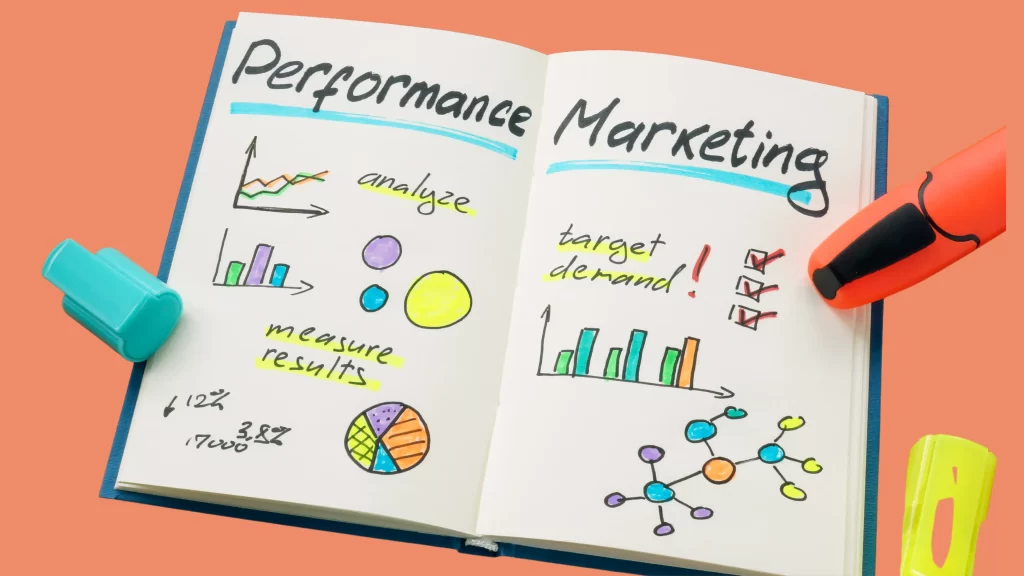
If your Meta Ads leads are not converting, increasing your advertising budget may simply increase the number of enquiries entering an inefficient sales process.
The better approach is to identify where customers are dropping off, fix the biggest conversion problem and measure the effect on actual sales.
Start by reviewing your advertisement messaging, lead qualification, response time, follow-up consistency, customer experience and tracking system.
Successful performance marketing is not just about generating more leads. It is about building a system that consistently turns relevant enquiries into paying customers.
Looking for a Performance Marketing Agency in India?
Choosing a performance marketing agency in India should involve more than comparing advertising fees or promises of low-cost leads. Businesses should look for a team that understands lead quality, conversion tracking, customer acquisition costs and the relationship between advertising and revenue.
Mathew Digital helps businesses approach performance marketing as a complete conversion system, from campaign strategy and creative testing to lead tracking and conversion optimisation.
If your business generates enquiries but struggles to convert them into sales, start by identifying where the process is breaking down.
Explore Mathew Digital’s performance marketing services to learn how a structured approach can help improve lead quality, sales visibility and customer acquisition.
Frequently Asked Questions (FAQs)
1. Why are my Meta Ads generating leads but not sales?
Meta Ads may generate leads without sales because of poor lead quality, unclear advertising messages, delayed follow-ups, pricing mismatches or weak sales processes. Identify where potential customers drop off to find the actual problem.
2. How can I fix Meta Ads leads not converting into sales?
Improve your ad messaging, qualify leads, respond quickly and maintain consistent follow-ups. Track the entire customer journey, from the first enquiry to the final purchase, to identify areas for improvement.
3. Why am I getting low-quality leads from Facebook Ads?
Low-quality leads from Facebook Ads may result from unsuitable audiences, unclear offers or creatives that attract curiosity rather than buying intent. Use specific messaging and relevant qualification questions to attract suitable prospects.
4. How do I convert Meta Ads leads into sales?
Respond promptly, understand customer requirements, address objections and follow up consistently. Track lead outcomes and optimise your campaigns based on qualified leads and actual sales rather than cost per lead alone.
5. What metrics should I track beyond cost per lead?
Track contact rate, qualified lead rate, lead-to-customer conversion rate, cost per acquisition and return on ad spend (ROAS). These metrics help you evaluate whether your Meta Ads are contributing to business growth.