
Quick Summary — What You Need to Know
- SEO is how your business gets found on Google without paying for every click — it builds long-term visibility that compounds over time unlike paid ads which stop the moment you stop spending.
- In 2026, SEO is not just about keywords anymore — Google now evaluates your content based on real expertise, user experience, and how well it answers genuine questions your customers are asking.
What is SEO in Digital Marketing?
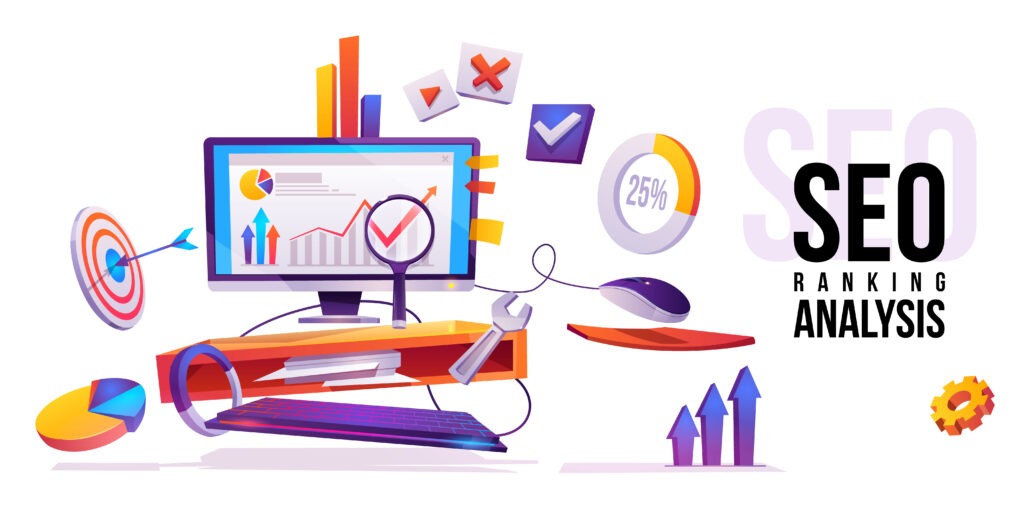
Every time a potential customer opens Google and types something like “best accountant near me” or “affordable interior design services,” Google runs through billions of web pages in a fraction of a second and decides which ones to show first. SEO — Search Engine Optimization — is the discipline of making sure your business shows up in those results.
In the context of digital marketing, SEO is the foundation that everything else sits on. You can run paid ads, post on Instagram, and send emails — but if your website isn’t optimized for search, you’re missing the single largest source of high-intent traffic available to any business.
Here’s what makes SEO different from other digital marketing channels:
- A person clicking on your Google ad was interrupted. They may or may not have been looking for you.
- A person who finds you through organic search was actively looking for exactly what you offer. They already want what you have.
That’s why organic traffic from SEO consistently converts better than most other traffic sources — and why businesses that invest in SEO early build a significant long-term advantage over those that rely purely on paid ads.
How SEO Fits Into Your Overall Digital Marketing Strategy
Many business owners treat SEO as a separate activity from the rest of their marketing. It isn’t. SEO works best when it connects with every other channel you use.
Here’s how SEO relates to the rest of digital marketing:
| Channel | What It Does | How It Connects to SEO |
| Google Ads (PPC) | Immediate paid visibility | Use your best-performing ad keywords to guide your SEO keyword strategy |
| Content Marketing | Builds trust through helpful articles and guides | Well-written content is the fuel that powers SEO rankings |
| Social Media | Builds brand awareness and engagement | Social sharing drives traffic and signals to Google that your content is valued |
| Email Marketing | Nurtures existing leads and customers | Drives repeat visits to your website, which improves engagement signals Google tracks |
| SEO | Long-term organic visibility on Google | Ties everything together by making your website the destination for all channels |
The businesses that grow the fastest online are not the ones that pick one channel. They are the ones that use SEO as the backbone of their digital presence and build every other channel around it.
Why SEO Matters More in 2026 Than Ever Before
Some business owners have asked us whether SEO is still worth investing in now that Google has introduced AI-generated answers. The honest answer is: yes — more than ever. Here’s why.
Google processes over 8.5 billion searches every single day. Even with AI Overviews appearing at the top of results, the vast majority of clicks still go to organic website results. The businesses that rank well continue to get significant traffic, leads, and revenue from organic search.
AI Overviews actually reward good SEO. When Google’s AI generates a summary answer at the top of search results, it pulls that information from websites that are well-structured, accurate, and clearly written. If your website has strong SEO, Google’s AI is more likely to cite your business as a source — which puts you in front of searchers even before they scroll to the organic results.
Paid ads are getting more expensive. As more businesses compete for ad space, the cost per click for Google Ads continues to rise. SEO, by contrast, has no cost-per-click. Once you rank, traffic is free. Businesses that build strong organic rankings are insulated from rising ad costs in a way that businesses relying purely on paid channels are not.
Trust is increasingly important. Studies consistently show that users trust organic results more than paid ads. Appearing organically at the top of Google signals to a potential customer that your business has earned its position — not just paid for it.
The 4 Types of SEO Every Business Needs to Understand
SEO is not a single activity. It is made up of four distinct areas that work together to build your visibility on Google. Understanding each one helps you prioritise where to focus your efforts.
On-Page SEO
On-page SEO is about what’s on your website — the words, structure, headings, images, and internal links on each page. When your pages are properly optimized, Google understands exactly what each page is about and who it should show it to. The most important On-page SEO factors are: using the right keywords in your page titles and headings, writing content that genuinely answers what your customers are searching for, keeping your pages fast and easy to navigate, and linking related pages together so both Google and visitors can move through your website easily.
Off-Page SEO
Off-page SEO is about building your website’s authority and reputation outside of your own website. The most important Off-page SEO factor is backlinks — when other reputable websites link to yours, Google treats it as a signal that your website can be trusted. Think of backlinks as professional referrals. One referral from a highly respected industry publication is worth far more than ten mentions from unknown websites. Quality matters far more than quantity when it comes to building backlinks.
Technical SEO
Technical SEO is about making sure Google can properly access, crawl, and understand your website. A website can have outstanding content and still rank poorly if it has technical problems — slow loading speed, broken links, poor mobile experience, or pages that Google can’t index. Technical SEO is the foundation that on-page and off-page work builds on. Without it, all your other efforts are limited by what Google can actually see and process on your site.
Local SEO
Local SEO is specifically for businesses that serve customers in a geographic area. It focuses on appearing in Google’s local map pack — the map results that show up when someone searches for a service “near me” or in a specific city.
If your business depends on local customers — whether you run a restaurant, a clinic, a salon, or any service-based business — local SEO is the highest-impact type of SEO you can invest in.
Keyword Research: The Starting Point of Every SEO Strategy
Before you write a single word of content or optimize a single page, you need to know what your customers are actually typing into Google. This is what keyword research does.
Keyword research reveals three critical things:
1. What your customers are actually searching for — not what you assume they search for. These are often different. A business owner might assume customers search for “professional financial consulting services.” In reality, they search for “CA for small business near me” or “how to file GST returns.”
2. How many people search for it — some keywords have thousands of searches per month, others have very few. Understanding search volume helps you prioritise which topics to create content for first.
3. How difficult it is to rank — some keywords are dominated by large national brands and are nearly impossible for a new website to rank for. Others have real opportunities for businesses willing to create genuinely helpful content.
The goal of keyword research is to find the intersection of: keywords your customers actually use, keywords with meaningful search volume, and keywords where you have a realistic chance of ranking. Targeting the right keywords is what separates SEO that drives real leads from SEO that looks busy but produces nothing.
What Google Actually Rewards in 2026: E-E-A-T
The single biggest shift in how Google evaluates websites in recent years is the growing importance of E-E-A-T: Experience, Expertise, Authoritativeness, and Trust.
This framework shapes how Google decides which content deserves to rank at the top of results. Here’s what each one means in practice:
Experience means your content reflects real, first-hand knowledge. Google can increasingly distinguish between content written by someone who has actually done something versus content that just aggregates information found elsewhere. Sharing real case studies, genuine insights from your industry, and content based on what you’ve actually seen with clients builds experience signals.
Expertise means your content demonstrates deep, specific knowledge of your subject. Broad, surface-level content that covers everything shallowly is increasingly penalized. Content that goes deep on specific topics and genuinely helps a reader solve a real problem is what ranks.
Authoritativeness is about your website’s reputation in your industry. Backlinks from respected industry sources, mentions in publications, and a consistent track record of publishing reliable content all build authority over time.
Trust is about whether Google and users can rely on the accuracy of your content. Keeping your content updated, citing credible sources, having clear contact information, and maintaining a professional, well-maintained website all contribute to trust signals.
The practical implication: publishing thin, generic, AI-generated content that says nothing new no longer works. What works is content that demonstrates real expertise, answers real questions with genuine depth, and is kept up to date as your industry evolves.
5 SEO Mistakes That Are Costing Indian Businesses Rankings Right Now
Mistake 1 — Targeting keywords nobody searches for. Many businesses optimize for industry jargon that their customers would never type into Google. Always validate keywords with real search data before building content around them.
Mistake 2 — Publishing content once and never revisiting it. Google’s freshness signals mean that outdated content gradually loses rankings. A blog post or service page written in 2022 with outdated information is actively working against you. Audit and update your key pages at least once a year.
Mistake 3 — Ignoring mobile speed. India has one of the highest rates of mobile internet usage in the world. If your website takes more than 3 seconds to load on a mobile connection, you are losing the majority of visitors before they see a single word of your content — and Google knows this and ranks you accordingly.
Mistake 4 — Creating multiple pages that target the same keyword. When two or more pages on your website target the same keyword, they compete against each other. Google gets confused about which one to rank and often ranks neither strongly. This is called keyword cannibalization — and it’s one of the most common and most fixable problems on business websites.
Mistake 5 — Treating SEO as a one-time task. SEO is not a project with a start and end date. It is an ongoing process. Competitors are continuously publishing new content, earning new backlinks, and improving their websites. Businesses that treat SEO as something they “did once” gradually lose ground to those that treat it as a continuous investment.
Where to Start If You’re New to SEO
If you’re just beginning, don’t try to do everything at once. Start with these five steps in order:
- Set up Google Search Console — it’s free and shows you exactly which queries your website appears for and which pages Google has indexed
- Fix any obvious technical issues — broken pages, slow load speed, and non-mobile-friendly design need to be addressed before anything else
- Research 5–10 keywords that your customers actually search for and that are realistic for your website to rank for
- Optimize your most important pages — your homepage and main service pages — around those keywords
- Start publishing consistent, genuinely helpful content on topics your customers care about — one well-researched article per month compounds significantly over time
SEO rewards consistency and patience more than any single tactic. Businesses that commit to it early and do it properly build a compounding asset that generates leads and visibility for years — without paying for every click.
Q1: How long does SEO take to show results?
Most businesses start seeing meaningful improvements in 3 to 6 months. However, this depends on how competitive your industry is, how old your website is, and how consistently you publish and optimize content. SEO is not a quick fix — it is a long-term investment that compounds over time. The businesses that start early always have an advantage over those that wait.
Q2: How much does SEO cost?
SEO costs vary depending on whether you do it yourself, hire a freelancer, or work with an agency. DIY SEO costs mostly your time. Freelancers in India typically charge ₹5,000–₹25,000 per month depending on scope. A professional agency will charge more but brings a full team, tools, and a structured strategy. The more important question is not what SEO costs — it is what it costs you to not invest in it while your competitors do.
Q3: Is SEO better than Google Ads for my business?
They serve different purposes. Google Ads gives you immediate visibility but stops the moment you stop paying. SEO takes longer to build but continues working without paying for every click. For most businesses, the smartest approach is to run Google Ads for immediate leads while simultaneously building SEO for long-term sustainable growth. One without the other leaves money on the table.
Q4: Do I need to keep updating my website for SEO to work?
Yes. SEO is not something you set up once and forget. Google rewards websites that stay fresh, accurate, and relevant. Outdated content gradually loses rankings. Your competitors are continuously improving their websites — if you stand still, you fall behind. At minimum, review and update your key pages once a year and publish new content consistently.
Q5: Can I do SEO myself or do I need to hire someone?
You can absolutely start SEO yourself — setting up Google Search Console, fixing basic technical issues, and publishing helpful content are all things a motivated business owner can do. However, as your business grows and competition increases, the complexity of SEO grows with it. At that point, working with an experienced SEO professional saves you significant time and avoids costly mistakes that can take months to recover from.

Conclusion
SEO is not a shortcut — but it is the most reliable long-term investment a business can make in its online presence.
Let’s recap what we covered. SEO is how your business gets found on Google by customers who are already looking for what you offer. It works across four areas — on-page, off-page, technical, and local — each playing a specific role in how Google evaluates and ranks your website. Keyword research tells you exactly what your customers are searching for so you can create content that meets them at the right moment. And in 2026, Google rewards businesses that demonstrate real expertise, keep their content fresh, and genuinely help their audience — not those who try to game the system with shortcuts.
The businesses winning on Google right now didn’t get there overnight. They started early, stayed consistent, and treated SEO as a core part of their growth strategy — not an afterthought.
Here’s what we want you to take away from this guide: you don’t need to be a technical expert to start. You need a clear strategy, the right keywords, helpful content, and the patience to let it compound. Every page you optimize, every article you publish, and every backlink you earn builds on the last. Six months from now, the businesses that start today will be ahead of every competitor that waited.
The best time to invest in SEO was two years ago. The second best time is right now.
Ready to build an SEO strategy that drives real, sustainable growth for your business? Explore our SEO services →