
Quick Summary: What You’ll Learn Here
- SEO is how your business gets found on Google for free — this guide walks you through exactly how it works and what to do first, even if you have zero technical knowledge.
- By the end of this guide you’ll know: what SEO is, how Google actually works, the 4 types of SEO, the free tools you need, and a simple step-by-step checklist to start right away.
What is SEO and Why Does It Matter for Your Business?

SEO stands for Search Engine Optimization. In plain terms, it means making your website show up on Google when your potential customers search for what you offer — without paying for ads.
Think about it this way. When someone searches “best chartered accountant near me” or “affordable wedding photographer in Mumbai,” Google shows a list of results. The businesses at the top of that list get most of the clicks, most of the calls, and most of the customers.
SEO is what gets your business to the top of that list.
The biggest difference between SEO and paid ads is simple. With Google Ads, you pay for every single click. The moment you stop paying, you disappear. With SEO, once your website ranks, traffic keeps coming without paying for every visitor. That is why SEO is one of the highest-return investments any business can make online.
How Google Actually Works (The Simple Version)
Before you start doing SEO, you need to understand how Google finds and ranks websites. It happens in 3 steps:
Step 1 — Crawl: Google sends out automated bots called crawlers that browse the internet and read every page they find. Think of them like librarians scanning new books as they arrive.
Step 2 — Index: After crawling your page, Google stores it in its index — a massive database of every page it has read. If your page is not in Google’s index, it does not exist as far as Google is concerned.
Step 3 — Rank: When someone searches for something, Google goes through its index and decides which pages to show first. It ranks pages based on relevance, quality, and trust. The better your SEO, the higher your page ranks.
Everything you do in SEO is aimed at helping Google crawl your website easily, understand what each page is about, and trust that your content is genuinely helpful.
The 4 Types of SEO Every Beginner Must Know
SEO is not just one thing. It has four areas that work together:
On-Page SEO
This is about what is on your website — the words, headings, titles, images, and links on each page. When you use the right keywords in the right places, Google understands what your page is about and shows it to the right people. This is the best place for beginners to start because you have full control over it. Check this to know more On-page SEO
Off-Page SEO
This is about building your website’s reputation outside of your own site. The most important Off-Page SEO factor here is backlinks — when other websites link to yours, Google treats it as a vote of confidence. The more quality websites that link to you, the more Google trusts your site.
Technical SEO
This is about making sure Google can properly read and access your website. Things like website speed, mobile-friendliness, broken links, and secure HTTPS connection all fall under technical SEO. Even the best content won’t rank if your website has serious technical problems.
Local SEO
If your business serves customers in a specific city or area, local SEO is the most important type for you. It helps your business show up when someone searches “near me” or searches for a service in your city. It involves optimizing your Google Business Profile, collecting reviews, and using location-based keywords.
Keyword Research: The Starting Point of All SEO
A keyword is simply what your customer types into Google. Keyword research is the process of finding out exactly what words and phrases your potential customers use — so you can create content around those exact searches.
For example, if you run a home cleaning business, your customers might search “home cleaning service in Delhi,” “house cleaning charges per month,” or “deep cleaning service near me.” Each of these is a keyword worth targeting.
Three things to check for every keyword:
Search Volume — How many people search for this every month? A keyword nobody searches for brings no traffic no matter how well you rank for it.
Relevance — Does this keyword match what your business actually offers? Ranking for an irrelevant keyword brings the wrong visitors who will never become customers.
Competition — How difficult is it to rank for this keyword? As a new website, target keywords where large national brands are not dominating every result.
Free SEO Tools Every Beginner Should Start With
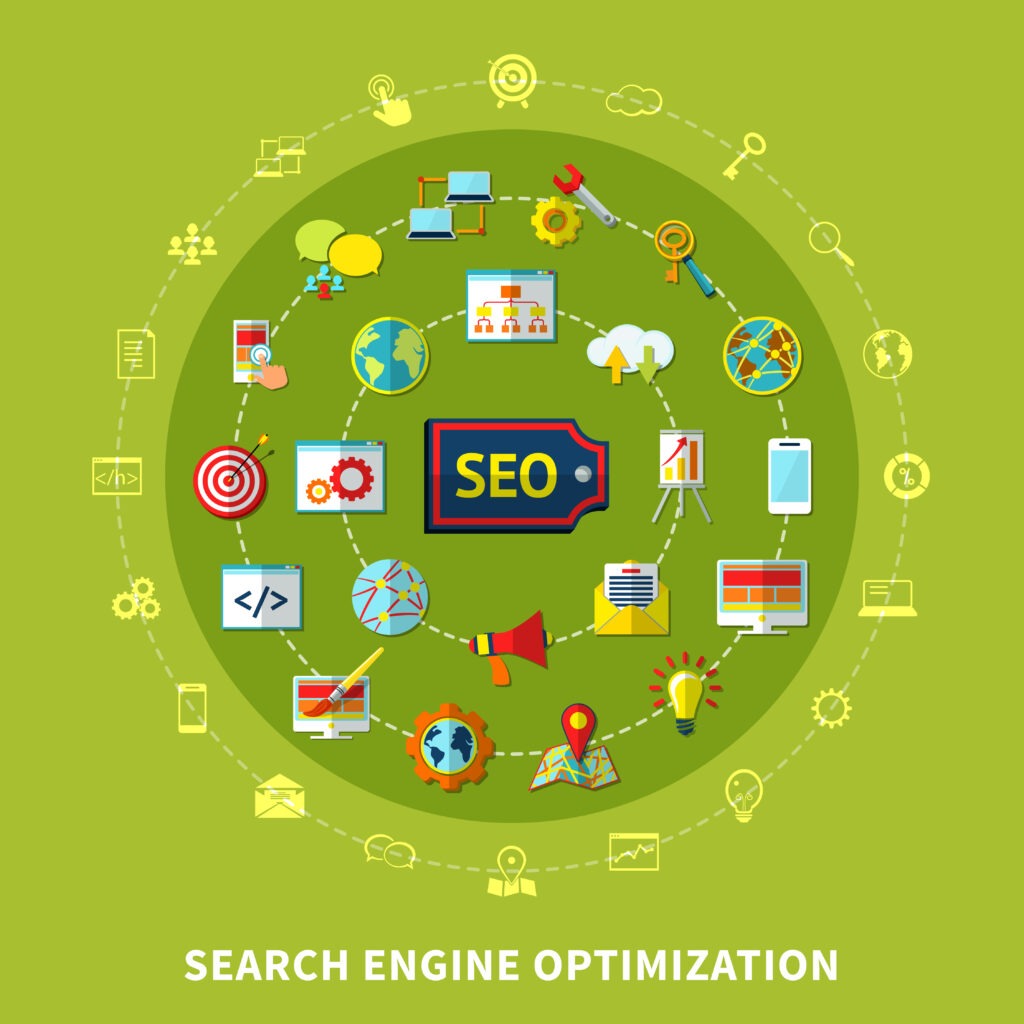
You do not need to spend money on expensive tools to get started with SEO. These free tools cover everything a beginner needs:
Google Search Console — shows you which keywords your website is ranking for, how many people are clicking on your pages, and which pages Google has indexed. This is the single most important free tool for any website owner.
Google PageSpeed Insights — checks how fast your website loads on mobile and desktop. Website speed directly affects both your rankings and how many visitors stay on your site.
Google Keyword Planner — helps you find keyword ideas and shows estimated monthly search volumes. Free to use with a Google account.
Rank Math — if your website is on WordPress, Rank Math is already installed on your site. It guides you through on-page SEO optimization for every page and blog post you publish.
Ubersuggest (free tier) — beginner-friendly keyword research tool that shows keyword ideas, search volume, and competition level without requiring technical knowledge.
SEO in 2026: 3 Things Every Beginner Needs to Know
SEO has changed significantly in the past two years. Here is what matters most right now:
Google rewards real expertise. In 2026, Google evaluates content based on E-E-A-T — Experience, Expertise, Authoritativeness, and Trust. Generic content written just to fill a page no longer ranks. Content that demonstrates real knowledge and genuinely helps the reader is what Google wants to show at the top.
AI Overview changes how people see search results. Google now shows an AI-generated answer at the very top of many search results. This AI pulls information from well-structured, accurate, and helpful websites. If your content is clear and authoritative, Google’s AI may feature your business — giving you visibility even before people scroll to the regular results.
Search intent matters more than keywords. Google no longer just matches keywords — it tries to understand what the searcher actually wants. A page that genuinely answers the question behind a search will outrank a page that just stuffs the keyword in repeatedly.
Your Beginner SEO Checklist: Where to Start
Do not try to do everything at once. Follow these steps in order:
- Set up Google Search Console — verify your website and check if Google has indexed your pages
- Check your mobile speed — use Google PageSpeed Insights and fix anything scoring below 70
- Find 5 keywords — use Google Keyword Planner or Ubersuggest to find 5 keywords your customers actually search for
- Optimize your homepage — add your main keyword to your page title, H1 heading, and meta description
- Write your first SEO blog post — pick one keyword from your list and write a genuinely helpful article around it
- Add internal links — link your new blog post to your main service pages and vice versa
- Check your progress — come back to Google Search Console after 4 weeks and see which queries your pages are appearing for
FAQ
Q1: How long does SEO take to show results?
Most beginners start seeing early improvements within 4 to 8 weeks of consistent effort. Meaningful traffic growth typically takes 3 to 6 months. SEO is a long-term investment — the results compound over time and keep working without paying for every click.
Q2: Do I need technical knowledge to do SEO?
No. The basics of SEO — keyword research, writing helpful content, optimizing your page titles and meta descriptions — require no technical skills. Tools like Rank Math and Google Search Console are designed for non-technical users. Technical SEO (site speed, structured data) may require a developer’s help later, but it is not where beginners should start.
Q3: Is SEO better than running Google Ads?
They serve different purposes. Google Ads gives immediate results but costs money for every click. SEO takes longer but builds sustainable visibility that does not disappear when you stop spending. For most Indian businesses, the smartest approach is to run ads for immediate leads while building SEO for long-term growth at the same time.
Q4: How many keywords should I target as a beginner?
Start with 5 to 10 keywords. Focus on specific, longer phrases like “home cleaning service in Pune” rather than broad single words like “cleaning.” Longer, specific keywords have less competition and attract visitors who are closer to making a purchase decision.
Q5: Can I do SEO myself or should I hire someone?
You can absolutely start SEO yourself using the checklist above and the free tools listed in this guide. Many Indian business owners make solid early progress on their own. As your business grows and competition increases, working with an experienced SEO professional saves significant time and helps you scale faster without making costly mistakes.
Conclusion
SEO is not as complicated as it sounds. At its core, it is about one thing: helping Google understand that your website genuinely helps people who are searching for what you offer.
Start with the basics — set up Google Search Console, research your keywords, optimize your most important pages, and publish helpful content consistently. Every step you take builds on the last. The businesses that start SEO early, stay consistent, and focus on genuinely helping their audience are the ones that build a lasting competitive advantage online.
You do not need to master everything before you start. Pick up the checklist above, take the first step today, and build from there. Six months from now, you will be ahead of every competitor that waited.
Want expert guidance on building your SEO strategy from the ground up? Explore our SEO services →