Running ads on Meta platforms has become essential for businesses looking to reach their target audience in India. But one question we hear constantly at Mathew Digital is: “How much do Meta Ads actually cost?”
If you’re planning to advertise on Facebook or Instagram, understanding the pricing structure is crucial for budget planning. In this complete guide, we’ll break down everything you need to know about Meta Ads cost in India for 2026.
What Are Meta Ads?
Meta Ads refer to paid advertisements that run across Meta’s family of platforms, primarily Facebook and Instagram. These ads help businesses reach specific audiences based on demographics, interests, behaviors, and more.
Why Invest in Meta Ads?
Meta platforms offer access to over 500 million users in India. Whether you run a local shop or an online store, Meta Ads can help you:
- Reach your target customers precisely
- Drive traffic to your website
- Generate quality leads
- Increase brand awareness
- Boost online sales
With the right strategy, Meta Ads deliver impressive returns on investment for businesses of all sizes.
Average Meta Ads Cost in India (2026)
Let’s get straight to the numbers. The meta ads pricing in India varies based on multiple factors, but here are the average costs you can expect in 2026.
Understanding the cost breakdown by campaign objective is crucial because Meta’s 2026 algorithm treats awareness campaigns very differently from performance campaigns. Here’s what you need to know:
Cost By Campaign Objective
The biggest shift in 2026 is the stark difference between awareness and performance campaign costs. Here’s the breakdown:
Awareness & Traffic Campaigns:
- Average CPC: ₹2 – ₹12
- Average CPM: ₹60 – ₹180
- Expected CTR: 1.5% – 2.5%
- Best for: Brand building, reaching cold audiences, content promotion
Lead Generation Campaigns (Form-based):
- Average CPC: ₹15 – ₹50
- Average CPM: ₹150 – ₹450
- Average CPL: ₹150 – ₹1,200
- Expected CTR: 0.8% – 1.4%
- Best for: Collecting inquiries, webinar registrations, consultation bookings
Sales & E-commerce Campaigns:
- Average CPC: ₹25 – ₹80
- Average CPM: ₹200 – ₹600
- Average CPA: ₹400 – ₹2,500
- Expected CTR: 1.2% – 3.0%
- Best for: Direct product sales, app installs, purchase conversions
Understanding the 2026 Cost Reality
The numbers above reflect actual market conditions in major Indian metros like Bangalore, Mumbai, and Delhi. At Mathew Digital, we’ve observed that performance campaigns (lead gen and sales) now cost significantly more than awareness campaigns because Meta’s algorithm prioritizes conversion signals.
Key Cost Factors in 2026
What makes 2026 different from previous years:
- Creative Quality Matters More: High-quality video content can reduce your CPM by up to 30%
- Data Accuracy Drives Costs: Advertisers using Conversions API see 15-20% lower costs
These numbers give you a baseline, but your actual costs will depend on several factors we’ll discuss next.
Facebook Ads Cost in India Breakdown
Facebook remains the largest platform within Meta’s ecosystem. Here’s what you need to know about Facebook ads cost in India.
Campaign Budget Options
Facebook offers flexible budgeting options:
Daily Budget: Set a specific amount to spend each day. Facebook spreads your budget evenly throughout the day.
Lifetime Budget: Set a total amount for your entire campaign duration. Facebook optimizes spending across the campaign period.
Minimum Budget Requirements
Facebook doesn’t have a strict minimum, but we recommend:
- Minimum daily budget: ₹100 per day per ad set
- Minimum lifetime budget: ₹500 for the campaign duration
Realistic Monthly Budgets
Based on our experience at Mathew Digital, here are practical monthly budgets:
- Testing phase: ₹5,000 – ₹10,000
- Small campaigns: ₹10,000 – ₹25,000
- Medium campaigns: ₹25,000 – ₹75,000
- Large campaigns: ₹75,000+
Instagram Ads Cost in India Explained
Instagram ads run through Facebook’s advertising platform, so the pricing structure is similar. However, there are some differences worth noting.
Instagram vs Facebook: Cost Comparison
Generally, Instagram ads cost in India is slightly higher than Facebook ads due to:
- Higher engagement rates
- Younger, more engaged audience
- Visual-first platform favoring premium content
Instagram Ad Format Costs
Different formats come with varying costs:
Stories Ads: Typically 10-20% cheaper than feed ads due to high inventory.
Feed Ads: Standard pricing, expect ₹1.00 – ₹3.00 CPC.
Reels Ads: Currently competitive pricing as Meta pushes Reels content.
Explore Ads: Premium placement with higher costs.
Best Practices for Instagram Ads
To keep costs manageable on Instagram:
- Use high-quality, eye-catching visuals
- Keep text minimal and impactful
- Test different ad formats
- Focus on storytelling
- Use relevant hashtags in organic posts to complement paid efforts
Factors Affecting Meta Ads Cost
Understanding what drives your ad costs helps you optimize spending. Here are the key factors affecting Meta Ads cost in 2026:
1. Creative Quality and Ad Fatigue (2026 Priority)
In 2026, Meta’s algorithm has made creative quality the single most important cost factor. This is the biggest shift from previous years.
Video Content Dominance:
- High-retention video hooks can reduce CPM by up to 30%
- Reels-style vertical videos perform best
- First 3 seconds determine your ad cost
The Creative Fatigue Problem: Your ad costs can double if you don’t refresh creative regularly. Based on our data at Mathew Digital:
- Refresh every 14 days to maintain optimal costs
- Ad fatigue increases costs by 2x after 21 days
- Fresh creative = lower CPM and better engagement
Creative as Targeting: Meta’s 2026 AI (Advantage+) uses your creative to find audiences. High-quality visuals now act as filters, making manual interest targeting less critical.
2. Data Tracking and Conversions API (CAPI)
This is where many advertisers lose money without realizing it. The quality of your conversion data directly impacts your costs.
The CAPI Advantage:
- Advertisers using Conversions API see 15-20% lower CPAs
- Server-side tracking captures conversions that browser cookies miss
- Better data = Meta’s algorithm optimizes more effectively
Why CAPI Matters in 2026: With iOS privacy changes and cookie restrictions, browser-based tracking misses conversions. CAPI sends conversion data directly from your server to Meta, giving the algorithm complete visibility.
At Mathew Digital, we prioritize CAPI implementation for all our clients because it’s no longer optional for competitive costs—it’s essential.
3. Target Audience
Your audience selection significantly impacts costs:
Broad Targeting (Lower costs, powered by AI):
- Larger audience size
- Algorithm learns from conversions
- More cost-effective in 2026
Narrow Targeting (Higher costs but specific):
- Detailed interest targeting
- Custom audiences
- Lookalike audiences
- Useful for niche products
The 2026 reality: Broad targeting with strong creative and CAPI often outperforms narrow targeting because Meta’s AI has improved significantly.
4. Industry and Competition
Some industries face higher costs due to competition:
- High-cost industries: Finance, insurance, legal, education, real estate
- Medium-cost industries: Healthcare, fitness, e-commerce
- Lower-cost industries: Food & beverage, entertainment, general retail
Industry competition directly affects auction prices, especially in metro cities.
5. Ad Quality and Relevance
Meta rewards high-quality ads with lower costs. They measure this through:
Relevance Score: Higher relevance = lower costs
Engagement Rate: More engagement = better ad placement
Click-Through Rate (CTR): Higher CTR = Meta favors your ad
Quality scores have become more important in 2026 as Meta pushes for better user experiences.
6. Bidding Strategy and Campaign Type
Your campaign setup affects costs significantly:
Advantage+ Shopping Campaigns (For E-commerce):
- 40% better efficiency than manual setups
- Fully automated optimization
- Required for competitive e-commerce costs in 2026
Standard Bidding Options:
- Lowest Cost: Let Meta find the cheapest opportunities
- Cost Cap: Set a maximum cost per result
- Bid Cap: Set a maximum bid amount
For e-commerce businesses, Advantage+ Shopping is no longer optional—it’s the standard for cost-effective campaigns.
7. Placement Options
Where your ads appear impacts pricing:
Automatic Placements: Lets Meta optimize across all placements (usually most cost-effective)
Manual Placements: You choose specific locations (Facebook feed, Instagram Stories, etc.)
In 2026, automatic placements work better because Meta’s algorithm finds the most cost-effective inventory across all platforms.
8. Timing and Seasonality
Costs fluctuate throughout the year:
Peak Seasons: Diwali, holiday seasons, major sales events see dramatic cost increases
Off-Peak: January-March often sees lower costs
Time of Day: Evening hours (6 PM – 10 PM) are typically more expensive
The 2026 seasonal impact is more pronounced than ever—we’ll cover this in detail in the festive pricing section below.
9. Geographic Location
Cities and regions have different costs:
Metro Cities (Mumbai, Delhi, Bangalore): Higher costs due to competition
Tier 2 Cities: Moderate costs with good engagement
Tier 3 Cities: Lower costs, growing potential
Bangalore, particularly areas like Whitefield and Sarjapur, sees some of the highest advertising costs in India.
Meta Ads Budget for Small Business
Small businesses need to be strategic with their advertising spend. Here’s our practical guide based on years of managing campaigns for small businesses in 2026.
Starting Budget Recommendations
If you’re just getting started, here’s what we recommend for 2026:
Month 1 (Testing Phase): ₹15,000 – ₹30,000
- Test different ad formats and creatives
- Gather initial conversion signals for CAPI
- Identify best-performing audiences
- Focus on data collection, not immediate ROI
Month 2-3 (Optimization Phase): ₹30,000 – ₹50,000
- Scale winning campaigns based on data
- Refine creative based on performance
- Implement Advantage+ campaigns
- Begin seeing consistent results
Month 4+ (Scaling Phase): ₹50,000 – ₹1,50,000+
- Invest heavily in proven strategies
- Expand to new audiences and placements
- Test new campaign objectives
- Focus on sustained growth
Why 2026 Budgets Are Higher
You might notice these budgets are higher than previous years. Here’s why:
- Data Collection Needs: Meta’s algorithm needs sufficient conversion data to optimize effectively
- Higher CPCs: Performance campaigns cost more as competition increases
- Creative Testing: You need budget for multiple creative variations
- CAPI Implementation: Better tracking requires investment
Starting with less than ₹15,000/month makes it difficult to gather meaningful signals for Meta’s algorithm.
Budget Allocation Strategy
Don’t put all your budget into one basket. We recommend splitting your budget:
- 60%: Best-performing campaigns
- 30%: Secondary campaigns
- 10%: Testing new ideas
Making Small Budgets Work
At Mathew Digital, we’ve helped small businesses achieve great results with limited budgets. Here’s how:
Focus on One Objective: Don’t spread thin across multiple goals
Target Locally: Smaller geographic areas reduce costs
Use Engagement Campaigns: Build awareness before pushing sales
Leverage Retargeting: Target people who already know your brand
Create Great Content: Quality beats quantity every time
When to Increase Your Budget
Look for these signs that you’re ready to scale:
- Consistent positive ROI (at least 2:1)
- Ad frequency below 3
- Audience not exhausted
- Clear winning campaigns
- Demand exceeds supply
Meta Ads Monthly Cost India: Planning Your Budget
Planning a monthly budget requires understanding your business goals and expected returns. Let’s break down monthly cost planning.
Setting Realistic Monthly Budgets
Your monthly meta ads budget should align with these factors:
Business Size and Revenue:
- Startups: 10-20% of projected revenue
- Growing businesses: 5-10% of monthly revenue
- Established businesses: 3-7% of monthly revenue
Marketing Goals:
- Brand awareness: Lower budget, CPM-focused
- Lead generation: Moderate budget, CPC/CPL focused
- Direct sales: Higher budget, ROAS-focused
Sample Monthly Budget Plans
Here are realistic monthly budget examples for 2026:
Starter Plan (₹15,000 – ₹30,000/month):
- Suitable for: Local businesses, service providers, solopreneurs
- Focus: Testing and data gathering
- Expected reach: 20,000 – 40,000 people
- Estimated clicks: 300 – 800
- Potential leads: 10 – 30
- Best for: Finding what works before scaling
Growth Plan (₹50,000 – ₹75,000/month):
- Suitable for: Growing e-commerce stores, online services, established local businesses
- Focus: Consistent lead generation or sales
- Expected reach: 60,000 – 100,000 people
- Estimated clicks: 1,200 – 2,000
- Potential leads: 50 – 100
- Best for: Building predictable customer acquisition
Scale Plan (₹1,00,000 – ₹1,50,000/month):
- Suitable for: Established brands, multiple product lines, competitive markets
- Focus: Dominating market share
- Expected reach: 120,000 – 200,000 people
- Estimated clicks: 2,500 – 4,000
- Potential leads: 100 – 200
- Best for: Aggressive growth and market expansion
Enterprise Plan (₹3,00,000+/month):
- Suitable for: Large businesses, comprehensive multi-platform campaigns
- Focus: Brand dominance and maximum reach
- Expected reach: 300,000+ people
- Estimated clicks: 6,000+
- Potential leads: 300+
- Best for: Market leaders with proven funnels
Monthly Cost Management Tips
Keep your monthly costs under control:
- Set Daily Spending Limits: Prevent overspending
- Monitor Daily: Check campaign performance every day
- Pause Underperforming Ads: Stop wasting money quickly
- A/B Test Continuously: Always improve
- Adjust Based on Results: Shift budget to winners
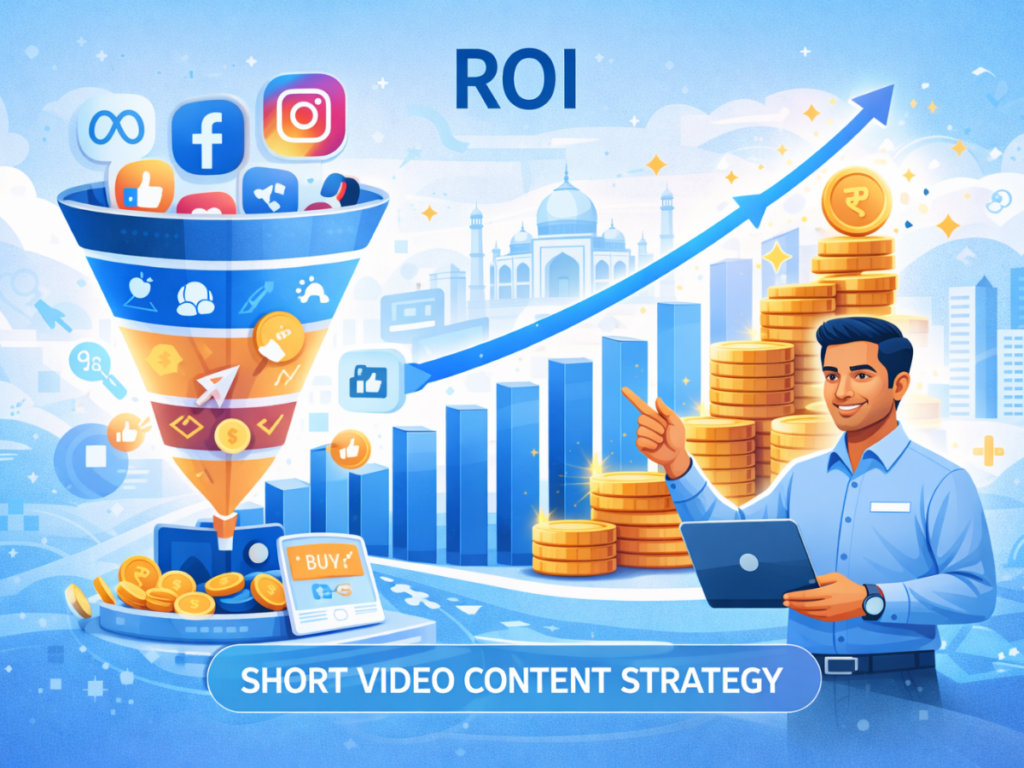
Meta Ads ROI: What Returns Can You Expect?
Understanding return on investment helps justify your ad spend. Let’s look at realistic ROI expectations for 2026.
Average ROI Benchmarks (2026 Data)
Based on our campaigns at Mathew Digital and industry data, here are typical ROI ranges:
E-commerce:
- ROAS (Return on Ad Spend): 2.2x to 3.8x
- For every ₹1 spent, expect ₹2.20 to ₹3.80 in revenue
- Top performers using Advantage+ Shopping: 4x to 6x ROAS
- Average order value significantly impacts ROAS
Lead Generation:
- Cost per lead: ₹150 – ₹1,200 (varies by industry)
- Lead-to-customer rate: 5-20%
- Customer lifetime value should be 5-10x lead cost
- Focus on lead quality, not just quantity
Service Businesses:
- Cost per lead: ₹300 – ₹1,500
- Conversion rate: 10-30%
- ROI: 5:1 to 15:1
- High-ticket services see better ROI despite higher CPLs
What Affects Your ROI in 2026
Several factors determine whether you hit these benchmarks:
Creative Quality: High-retention video content drives 30-40% better ROI
Data Accuracy: CAPI implementation improves ROI by 15-20%
Landing Page Experience: Mobile-optimized, fast-loading pages are non-negotiable
Customer Lifetime Value: Higher LTV justifies higher acquisition costs
Calculating Your Meta Ads ROI
Use this simple formula:
ROI = (Revenue from Ads – Ad Spend) / Ad Spend × 100
Example:
- Ad spend: ₹20,000
- Revenue generated: ₹80,000
- ROI = (₹80,000 – ₹20,000) / ₹20,000 × 100 = 300%
Improving Your ROI
Here’s how we boost ROI for our clients:
1. Optimize Targeting: Focus on audiences that convert
2. Improve Ad Creative: Better ads = better results
3. Enhance Landing Pages: Conversion-optimized pages make a huge difference
4. Use Retargeting: Cheaper conversions from warm audiences
5. Test Continuously: Always be improving
Tracking ROI Properly
Many businesses struggle with ROI tracking. Ensure you:
- Install Facebook Pixel correctly
- Set up conversion tracking
- Use UTM parameters
- Connect your CRM or analytics
- Track offline conversions too
How Much Do Meta Ads Cost in India: Industry-Specific Breakdown
Different industries experience vastly different costs. Here’s what to expect in your sector based on 2026 market data.
E-commerce and Retail
Average CPC: ₹8 – ₹35 Average CPM: ₹80 – ₹250 Average CPA: ₹400 – ₹2,000 Expected ROAS: 2.2x – 3.8x
E-commerce sees competitive pricing, especially during sales seasons. The 2026 game-changer:
Advantage+ Shopping Campaigns:
- 40% better efficiency than manual campaigns
- Mandatory for competitive costs
- Automated creative testing and audience finding
What Works in 2026:
- Dynamic product ads with video
- Retargeting abandoned carts
- Seasonal promotions with fresh creative
- Mobile-first shopping experiences
Cost Spikes: During Big Billion Days, Prime Day, and Diwali, expect costs to triple.
Real Estate
Average CPC: ₹12 – ₹60 Average CPM: ₹150 – ₹400 Average CPL: ₹500 – ₹1,800
Real estate faces the highest costs in India due to:
- High-value transactions (₹50 lakhs to ₹5 crores+)
- Extremely competitive metro markets
- Long sales cycles requiring nurture
Bangalore Premium Markets:
- Whitefield, Sarjapur luxury projects: ₹2,000 – ₹2,500 per lead
- Electronic City, Hosur Road: ₹1,200 – ₹1,800 per lead
- North Bangalore affordable housing: ₹500 – ₹1,000 per lead
What Works:
- High-quality property video tours
- Virtual walkthroughs and 3D renders
- Location-specific targeting
- Lead forms with instant follow-up
Education and E-learning
Average CPC: ₹8 – ₹22 Average CPM: ₹100 – ₹300 Average CPL: ₹150 – ₹700
Education sector costs have risen 15% in 2026 due to crowded auctions. Peak periods:
High-Cost Periods:
- Admission seasons (March-July)
- Exam preparation periods (September-November)
- Course launch seasons
Industry Segments:
- Competitive exams (IIT-JEE, NEET, UPSC): ₹300 – ₹700 per lead
- Upskilling/Professional courses: ₹150 – ₹400 per lead
- K-12 tutoring: ₹100 – ₹250 per lead
- Study abroad: ₹400 – ₹1,000 per lead
What Works:
- Student success stories and testimonials
- Free trial or demo class offers
- Faculty credentials and course outcomes
- Career transformation narratives
Healthcare and Wellness
Average CPC: ₹10 – ₹35 Average CPM: ₹120 – ₹300 Average CPL: ₹200 – ₹900
Healthcare advertising requires careful compliance with Meta’s policies.
Segment Breakdown:
- General clinics (dental, skin, hair): ₹200 – ₹500 per lead
- Specialized treatments (IVF, cosmetic surgery): ₹600 – ₹1,500 per lead
- Wellness and fitness: ₹150 – ₹400 per lead
- Diagnostic centers: ₹100 – ₹300 per lead
2026 Advantage: Local service ads in healthcare see excellent results with CPCs as low as ₹10-₹18 when using Meta’s Local Awareness AI tools.
What Works:
- Doctor credentials and patient testimonials
- Before/after results (where permitted)
- Health education content
- Emergency or time-sensitive messaging
Food and Beverage
Average CPC: ₹4 – ₹15 Average CPM: ₹50 – ₹120 Average CPL: ₹50 – ₹250
Food businesses often see the lowest costs with highest engagement rates.
Why Costs Are Lower:
- Visual content naturally performs well
- High organic engagement boosts paid performance
- Large addressable audience
- Frequent purchase cycles
What Works Best:
- Mouth-watering food photography and video
- Limited-time offers and urgency
- User-generated content and reviews
- Instagram Reels showcasing food prep
Professional Services (Legal, Consulting, Accounting)
Average CPC: ₹15 – ₹70 Average CPM: ₹180 – ₹450 Average CPL: ₹500 – ₹2,000
High-value services face premium costs but justify them with high-ticket clients.
Industry Variations:
- Legal services: ₹800 – ₹2,000 per lead
- Business consulting: ₹600 – ₹1,500 per lead
- CA/Tax services: ₹400 – ₹1,000 per lead
- IT consulting: ₹700 – ₹1,800 per lead
What Works:
- Authority positioning and credentials
- Case studies and client results
- Free consultation offers
- Thought leadership content
Meta Ads Cost Breakdown India: Where Your Money Goes
Understanding the complete cost breakdown helps you budget effectively. Here’s where every rupee goes.
Platform Fees
Meta doesn’t charge separate platform fees. You pay only for ad delivery:
Auction System: You compete with other advertisers for ad space
Cost Components:
- Ad delivery costs (based on your bid)
- No hidden charges or commissions
- Pay only for results you choose (clicks, impressions, conversions)
Ad Creation Costs
Beyond platform costs, consider these expenses:
DIY Approach: Free (your time)
- Canva or similar tools
- Smartphone photography
- Self-written copy
Professional Creative: ₹5,000 – ₹50,000+
- Professional photography: ₹5,000 – ₹20,000
- Video production: ₹10,000 – ₹100,000+
- Graphic design: ₹2,000 – ₹10,000 per asset
- Copywriting: ₹1,000 – ₹5,000 per ad
Management Costs
If you’re not running ads yourself:
Agency Management (like Mathew Digital):
- 15-20% of ad spend for larger budgets
- Fixed monthly fees for smaller budgets (₹15,000 – ₹50,000/month)
- Includes strategy, creation, optimization, and reporting
Freelancer Management:
- ₹8,000 – ₹30,000/month
- Variable quality and commitment
In-house Team:
- Salary costs (₹25,000 – ₹60,000/month for a skilled professional)
- Training and tool costs
- Overhead expenses
Tools and Software
Professional management requires tools:
- Ad spy tools: ₹1,500 – ₹5,000/month
- Design software: ₹1,000 – ₹4,000/month
- Analytics tools: ₹2,000 – ₹10,000/month
- Landing page builders: ₹1,000 – ₹8,000/month
The Hidden Cost Factor: Conversions API (CAPI)
This is the most overlooked cost factor in 2026, yet it impacts your meta ads cost in India more than almost anything else. Let’s break down why CAPI is non-negotiable for competitive advertising.
What is Conversions API?
Conversions API (CAPI) is Meta’s server-side tracking solution that sends conversion data directly from your server to Meta, bypassing browser limitations.
Traditional Tracking (Meta Pixel only):
- Browser-based tracking
- Affected by iOS privacy changes
- Cookie blockers prevent tracking
- 20-40% of conversions go unreported
With CAPI (Server-side tracking):
- Direct server-to-Meta communication
- Not affected by browser restrictions
- Captures all conversions accurately
- Complete data for Meta’s algorithm
The 15-20% Cost Advantage
At Mathew Digital, we’ve seen consistent results: advertisers using CAPI see 15-20% lower cost per acquisition compared to those relying only on browser-based tracking.
Why CAPI Reduces Costs:
- Better Algorithm Optimization: Meta’s AI needs accurate conversion data to find the right audiences. More data = better optimization = lower costs.
- Complete Conversion Picture: When Meta can see all conversions (not just the ones browsers report), it makes smarter bidding decisions.
- Match Quality: CAPI sends first-party data that matches better with Meta’s user profiles, improving targeting precision.
- Event Quality Score: Meta rates your data quality. Higher scores = better ad delivery = lower costs.
Real-World Impact
Here’s what we observed in a 3-month study with our clients:
E-commerce Client (Fashion brand):
- Before CAPI: ₹1,200 cost per purchase
- After CAPI: ₹950 cost per purchase
- 21% reduction in CPA
Lead Gen Client (Real estate):
- Before CAPI: ₹850 cost per lead
- After CAPI: ₹680 cost per lead
- 20% reduction in CPL
The “Signal” Over the “Click”: In 2026, Meta’s algorithm prioritizes conversion signals over engagement metrics. Without CAPI, you’re flying blind—and paying extra for it.
Implementing CAPI
Implementation requires technical setup:
DIY Implementation:
- Requires developer resources
- Setup time: 2-4 weeks
- Ongoing maintenance needed
- Cost: Developer time
Agency Implementation (What We Offer):
- Complete setup and testing
- Integration with your website/CRM
- Continuous monitoring
- Included in our management packages
The ROI Math: Even if CAPI setup costs ₹20,000-₹40,000, the 15-20% cost savings pay for itself within 1-2 months for most advertisers spending ₹50,000+/month.
CAPI Is Not Optional in 2026
With iOS privacy restrictions and increasing cookie limitations, relying solely on browser-based tracking puts you at a massive disadvantage. Your competitors using CAPI are:
- Seeing 15-20% lower CPAs
- Getting better algorithm optimization
- Capturing complete conversion data
- Outbidding you while spending less
At Mathew Digital, CAPI implementation is the first thing we do for every new client. It’s the foundation of cost-effective advertising in 2026.
Tips to Reduce Meta Ads Cost in India
Want to stretch your budget further? Here are proven strategies we use at Mathew Digital to reduce costs while maintaining results in 2026.
1. Implement Conversions API (Priority #1)
This should be your first step, not your last:
The Impact: 15-20% lower CPAs immediately
How to Do It:
- Work with your developer or agency
- Set up server-side tracking
- Test data quality scores
- Monitor improvement in algorithm performance
At Mathew Digital, we prioritize CAPI setup for every client because it’s the foundation of cost-effective advertising.
2. Refresh Creative Every 14 Days
Ad fatigue is real and expensive in 2026:
The Problem: Your ad costs can double after 21 days with the same creative
The Solution:
- Create 3-5 creative variations upfront
- Rotate fresh creative every 2 weeks
- Test new hooks, visuals, and messaging
- Monitor frequency metrics (keep below 3)
Creative Best Practices for 2026:
- Video-first: High-retention video reduces CPM by 30%
- Hook in 3 seconds: First 3 seconds determine everything
- Vertical format: Reels-style videos perform best
- Clear CTA: Make the next step obvious
3. Leverage Advantage+ Campaigns
For e-commerce, this isn’t optional anymore:
Why It Works:
- 40% better efficiency than manual campaigns
- Automated creative and audience testing
- Real-time optimization across placements
- Simplified campaign structure
When to Use:
- All e-commerce sales campaigns
- Sufficient conversion data (50+ per week)
- Multiple creative assets available
4. Improve Your Ad Relevance Score
Higher relevance scores lead to lower costs:
Create Compelling Headlines: Grab attention in first 3 seconds
Write Benefit-Focused Copy: Focus on what’s in it for the customer
Use Clear CTAs: Tell people exactly what to do next
Match Ad to Audience: Personalize messaging for different segments
Test Continuously: What worked last month might not work today
5. Optimize Your Targeting Strategy
In 2026, broader targeting often works better:
Let the Algorithm Work:
- Start with broad targeting
- Let Meta’s AI find your audience
- Provide strong creative as the “filter”
- Feed the algorithm with CAPI data
Use Lookalike Audiences:
- Based on your best customers
- Start with 1-2% similarity
- Expand gradually as you scale
Exclude Converters: Don’t waste budget on people who already converted
6. Master Retargeting
Retargeting campaigns typically cost 50-70% less than cold traffic:
Website Visitors: Target people who visited but didn’t convert
Engaged Users: Target people who interacted with your content
Email Lists: Upload customer emails for custom audiences
Video Viewers: Retarget people who watched 50%+ of your videos
Cart Abandoners: Highest intent, lowest cost audiences
7. Time Your Campaigns Strategically
Strategic timing saves 40-50% annually:
Off-Peak Strategy:
- Run awareness campaigns January-March
- Build large retargeting audiences
- Test creative when costs are low
Peak Season Strategy:
- Focus on retargeting during Sep-Nov
- Increase budget 2-3x if competing during peaks
- Start early to build momentum
Avoid Blind Competition: Don’t fight in crowded auctions unless you must
8. Improve Your Landing Pages
Better landing pages reduce wasted spend:
Fast Loading: Every second of delay costs conversions
- Aim for under 2 seconds load time
- Optimize images and code
- Use CDN for faster delivery
Mobile-Optimized: 70%+ of traffic is mobile
- Mobile-first design approach
- Large, tappable buttons
- Simple forms (fewer fields = more conversions)
Clear Value Proposition: Tell visitors why they should care
- Above-the-fold clarity
- Strong headline that matches ad
- Social proof and trust signals
Strong CTA: Make the next step obvious
- Contrasting button colors
- Action-oriented copy
- Single, clear conversion path
9. Use Automatic Placements
Let Meta optimize placement for best costs:
Why It Works:
- Access to all inventory across platforms
- Algorithm finds most cost-effective placements
- Automatic testing across Stories, Feed, Reels
- Usually 20-30% more cost-effective
When to Override:
- Specific brand safety concerns
- Creative doesn’t work on certain placements
- Historical data shows specific placements underperform
10. Monitor and Optimize Daily
Successful campaigns require constant attention:
Daily Tasks:
- Check campaign performance metrics
- Pause ads with frequency above 4
- Identify winning creative and scale
- Remove underperforming variations
Weekly Tasks:
- Analyze audience performance
- Refresh creative if needed
- Adjust budgets based on ROI
- Test new audiences or strategies
Monthly Tasks:
- Deep-dive performance analysis
- Review overall ROI and ROAS
- Plan next month’s strategy
- Implement learnings
The combination of these strategies can reduce your meta ads monthly cost in India by 30-50% while maintaining or improving results.
Working with a Digital Marketing Agency in Bangalore
Managing Meta Ads effectively in 2026 requires expertise, advanced technical setup, and constant optimization. That’s where partnering with the right agency makes a crucial difference.
Benefits of Professional Management
Expert Strategy: Years of experience navigating Meta’s evolving algorithm
Technical Excellence: Proper CAPI implementation from day one
Time Savings: Focus on your business while experts handle complex optimization
Better Results: Professional management typically delivers 2-3x better ROI
Advanced Tools: Access to premium analytics and optimization tools
Consistent Optimization: Daily monitoring and improvements
Creative Expertise: Fresh, high-performing creative every 14 days
What Mathew Digital Offers
As a leading digital marketing agency in Bangalore, we specialize in cost-effective Meta advertising for 2026:
Comprehensive Meta Ads Management:
- Conversions API Setup: We implement CAPI for every client (15-20% cost reduction)
- Advantage+ Campaigns: Leveraging Meta’s AI for 40% better efficiency
- Creative Strategy: Refresh cycles every 14 days to prevent ad fatigue
- Data-Driven Targeting: Broad targeting powered by strong creative and accurate data
- Seasonal Planning: Strategic timing to avoid 3x peak season costs
2026-Specific Expertise:
- Algorithm Mastery: Understanding Meta’s latest AI-driven optimization
- Video-First Creative: High-retention content that reduces CPM by 30%
- Server-Side Tracking: Complete conversion visibility for better optimization
- Festive Season Strategy: Navigate October-November pricing spikes efficiently
Transparent Pricing:
- No hidden fees or surprise charges
- Clear monthly reporting with ROI tracking
- Budget recommendations based on your goals
- Competitive rates with proven results
Local Market Expertise:
- Deep understanding of Indian market dynamics
- Experience across Bangalore’s competitive landscape
- Knowledge of regional preferences and behaviors
- Proven track record in metro and tier-2 markets
Our Track Record
E-commerce Clients:
- Average ROAS: 3.2x (vs. industry average of 2.5x)
- Cost per acquisition reduced by 25% after CAPI implementation
- Successfully scaled campaigns from ₹50,000 to ₹3,00,000/month
Lead Generation Clients:
- Real estate: ₹680 average CPL (vs. industry ₹850)
- Education: ₹320 average CPL (vs. industry ₹450)
- Healthcare: ₹280 average CPL (vs. industry ₹400)
Service-Based Businesses:
- 40% reduction in annual ad spend through strategic timing
- 5:1 to 12:1 ROI consistently delivered
- High-ticket client acquisition at competitive costs
Choosing the Right Agency
When selecting a digital marketing partner, look for:
Technical Competence:
- CAPI implementation capability
- Understanding of Meta’s 2026 algorithm changes
- Advantage+ campaign expertise
Proven Results:
- Case studies with actual numbers
- Client testimonials from your industry
- Transparent reporting methodology
Strategic Thinking:
- Seasonal planning and timing strategies
- Long-term audience building approach
- Data-driven decision making
Transparent Communication:
- Regular updates and honest feedback
- Clear explanation of costs and ROI
- Proactive strategy recommendations
Fair Pricing:
- Competitive rates with clear value
- No long-term lock-ins
- Performance-based success
Why Agencies Often Cost Less Than DIY
Many businesses think they’re saving money by managing ads themselves, but the reality is different:
Hidden Costs of DIY:
- Learning curve mistakes (typically ₹50,000-₹1,00,000 wasted)
- No CAPI implementation (15-20% higher costs ongoing)
- Creative fatigue (2x costs after 21 days)
- Poor timing (3x costs during peak seasons without strategy)
- Outdated tactics (Meta’s algorithm changes constantly)
Agency Value:
- Avoid expensive mistakes from day one
- Immediate CAPI setup and ongoing optimization
- Professional creative refresh cycles
- Strategic seasonal planning
- Better results from month one
Working with a professional agency like Mathew Digital often costs less in the long run by avoiding expensive mistakes, implementing technical excellence, and maximizing returns from day one.
Conclusion
Understanding meta ads cost in India is essential for planning effective campaigns in 2026. The landscape has evolved significantly, with new technical requirements and strategic considerations that directly impact your advertising costs.
Key takeaways from this complete pricing guide:
2026 Cost Reality:
- Awareness campaigns: ₹2-₹12 CPC, ₹60-₹180 CPM
- Lead generation: ₹15-₹50 CPC, ₹150-₹1,200 CPL
- E-commerce sales: ₹25-₹80 CPC, average ROAS 2.2x-3.8x
- Industry-specific variations from ₹500-₹2,500 per lead
Technical Essentials:
- Conversions API is mandatory: 15-20% cost reduction with proper implementation
- Creative refresh every 14 days: Prevents 2x cost increase from ad fatigue
- Advantage+ for e-commerce: 40% better efficiency than manual campaigns
- Video-first content: 30% CPM reduction with high-retention videos
Strategic Planning:
- Small businesses should start with ₹15,000-₹30,000 monthly budgets
- Festive season costs triple (September-November)
- Off-peak building strategy saves 40-50% annually
- Professional management prevents costly mistakes
What’s Different in 2026:
- Algorithm prioritizes creative quality over manual targeting
- Data accuracy (CAPI) drives cost more than bid strategy
- Automation (Advantage+) outperforms manual optimization
- Seasonal fluctuations are more extreme than ever
Meta Ads remain one of the most cost-effective advertising channels in India when managed correctly. The key is understanding the 2026 landscape: technical excellence with CAPI, creative refresh cycles, strategic timing, and algorithm-friendly approaches.
Whether you manage campaigns yourself or partner with a digital marketing agency in Bangalore like Mathew Digital, success comes from starting with clear goals, implementing proper tracking from day one, and continuously optimizing based on data.
The difference between expensive, ineffective campaigns and profitable, scalable advertising often comes down to these technical and strategic fundamentals. Invest time in getting them right, or work with experts who already have.
Ready to get started with Meta Ads in 2026? Focus on three priorities: implement CAPI for accurate tracking, create high-quality video content, and plan your budget with seasonal fluctuations in mind. Your investment in Meta advertising can deliver substantial returns when managed strategically with 2026 best practices.
Frequently Asked Questions (FAQs)
Q1: What is the minimum budget needed to start Meta Ads in India in 2026?
A1: For 2026, we recommend a minimum of ₹15,000-₹30,000 for your first month. This is higher than previous years because Meta’s algorithm needs sufficient conversion data to optimize effectively. Starting with less than ₹15,000 makes it difficult to gather meaningful signals, especially with 2026’s higher CPC rates. This budget allows you to test 3-5 ad variations, reach 20,000-40,000 people, and gather the data needed to optimize campaigns. At Mathew Digital, we’ve found that clients starting with adequate budgets see positive ROI by month 2-3, while those starting too small often waste money without learning anything useful.
Q2: What is Conversions API (CAPI) and do I really need it?
A1: Conversions API is Meta’s server-side tracking that sends conversion data directly from your server to Meta, bypassing browser limitations. Yes, you absolutely need it in 2026. Advertisers using CAPI see 15-20% lower cost per acquisition compared to those relying only on browser-based tracking (Meta Pixel). With iOS privacy changes and cookie restrictions, browser-only tracking misses 20-40% of conversions, meaning Meta’s algorithm can’t optimize properly. Without CAPI, you’re essentially flying blind and paying 15-20% more for the same results. The setup costs ₹20,000-₹40,000 but pays for itself within 1-2 months. At Mathew Digital, CAPI implementation is the first thing we do for every client because it’s the foundation of cost-effective advertising in 2026.
Q3: How often should I refresh my ad creative to avoid increased costs?
A1: In 2026, you need to refresh your ad creative every 14 days to maintain optimal costs. Ad fatigue happens faster than ever, and your costs can double if you keep running the same creative beyond 21 days. This is one of the biggest changes from previous years. Meta’s algorithm now heavily penalizes stale creative with higher CPMs and CPCs. The solution is to create 3-5 creative variations upfront and rotate them every two weeks. Focus on video content with strong hooks in the first 3 seconds, as high-retention video can reduce your CPM by up to 30%. Monitor your frequency metric—if it goes above 3-4, it’s time to introduce fresh creative immediately.
Q4: Why do Meta Ads costs triple during festive season and how can I avoid this?
A1: Costs triple during September-November (Diwali, Navratri, Big Billion Days) because of intense auction competition. More advertisers compete for the same audience, and with limited ad inventory, prices skyrocket—sometimes by 200-300%. The smart strategy is to avoid competing during peak season unless you’re in e-commerce and must participate. Instead, run awareness campaigns during off-peak months (January-August) to build large retargeting audiences. Then during the expensive months, focus only on retargeting these warm audiences, which costs 50-70% less than cold traffic. This approach can save you 40-50% on annual ad spend while maintaining or improving results. At Mathew Digital, we plan client campaigns around this calendar to maximize ROI.
Q5: Is Advantage+ Shopping worth it for my e-commerce business?
A1: Yes, Advantage+ Shopping Campaigns are not just worth it—they’re essential for competitive e-commerce advertising in 2026. Advertisers using Advantage+ see 40% better efficiency compared to manual campaign setups. The algorithm automatically tests creative variations, finds optimal audiences, and adjusts bids in real-time across all placements. It requires less manual work and delivers better results. However, you need at least 50 conversions per week for the algorithm to optimize effectively, and you must have Conversions API (CAPI) properly implemented. If you’re running e-commerce and not using Advantage+ Shopping, you’re likely paying significantly more for the same results. This is one of the biggest competitive advantages available in 2026, and we implement it for all our e-commerce clients at Mathew Digital.